
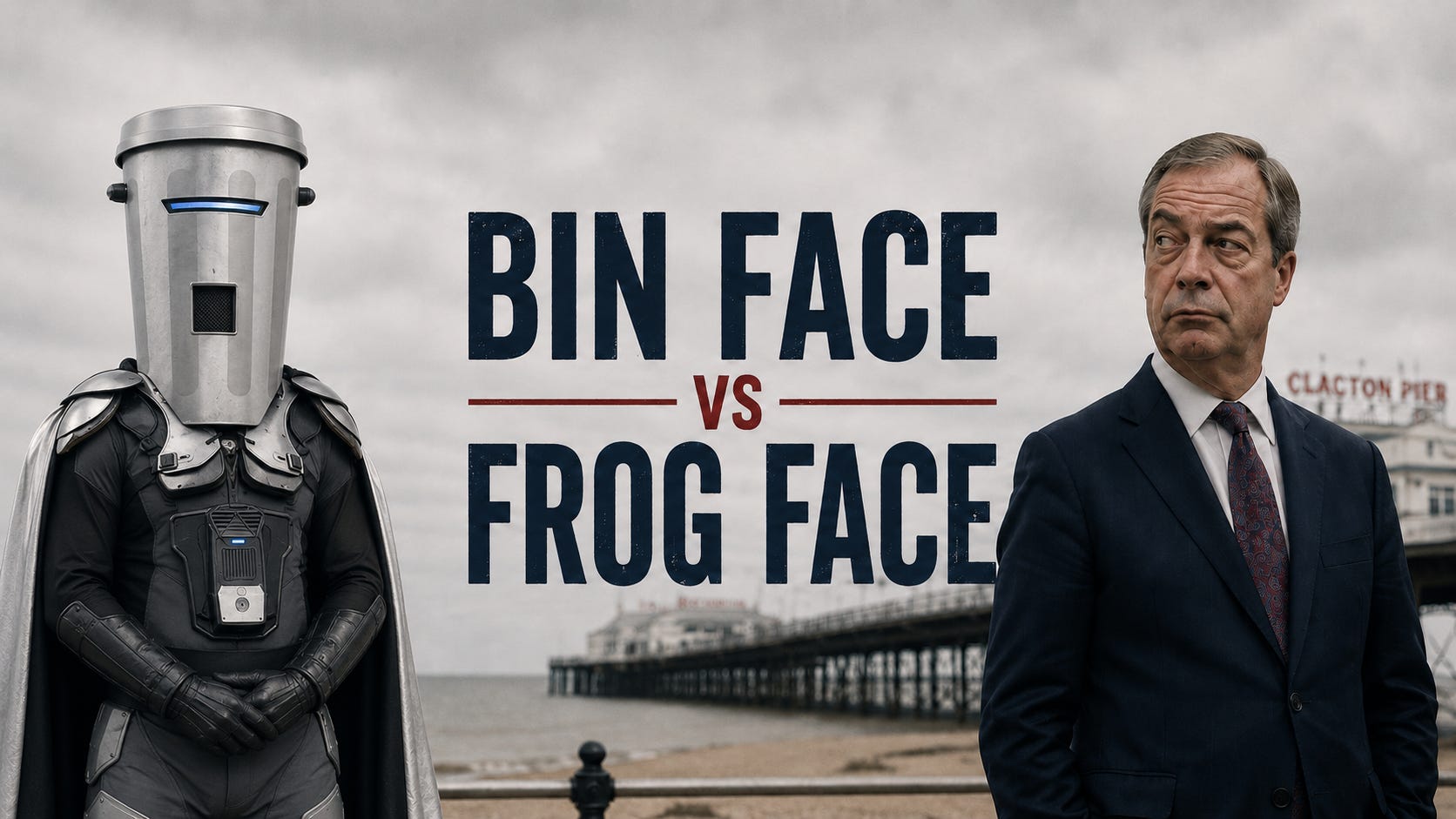
There are moments in British politics when satire stops being commentary and becomes administrative necessity.
Clacton 2026 appears to be one of those moments.
Following Nigel Farage’s resignation as MP for Clacton, and his immediate decision to stand again in the by-election created by that resignation, the Institute for Advanced Electoral Analysis convened an emergency review of the available democratic material.
The situation was already unusual.
Then Count Binface entered the frame.
At that point, responsible analysis became unavoidable.
What follows is the Institute’s independent comparative assessment of the two leading anti-establishment candidates: one openly presented as a satirical intervention in British democracy; the other, Nigel Farage.
The distinction, as the report will show, is not always as clear as one might hope.
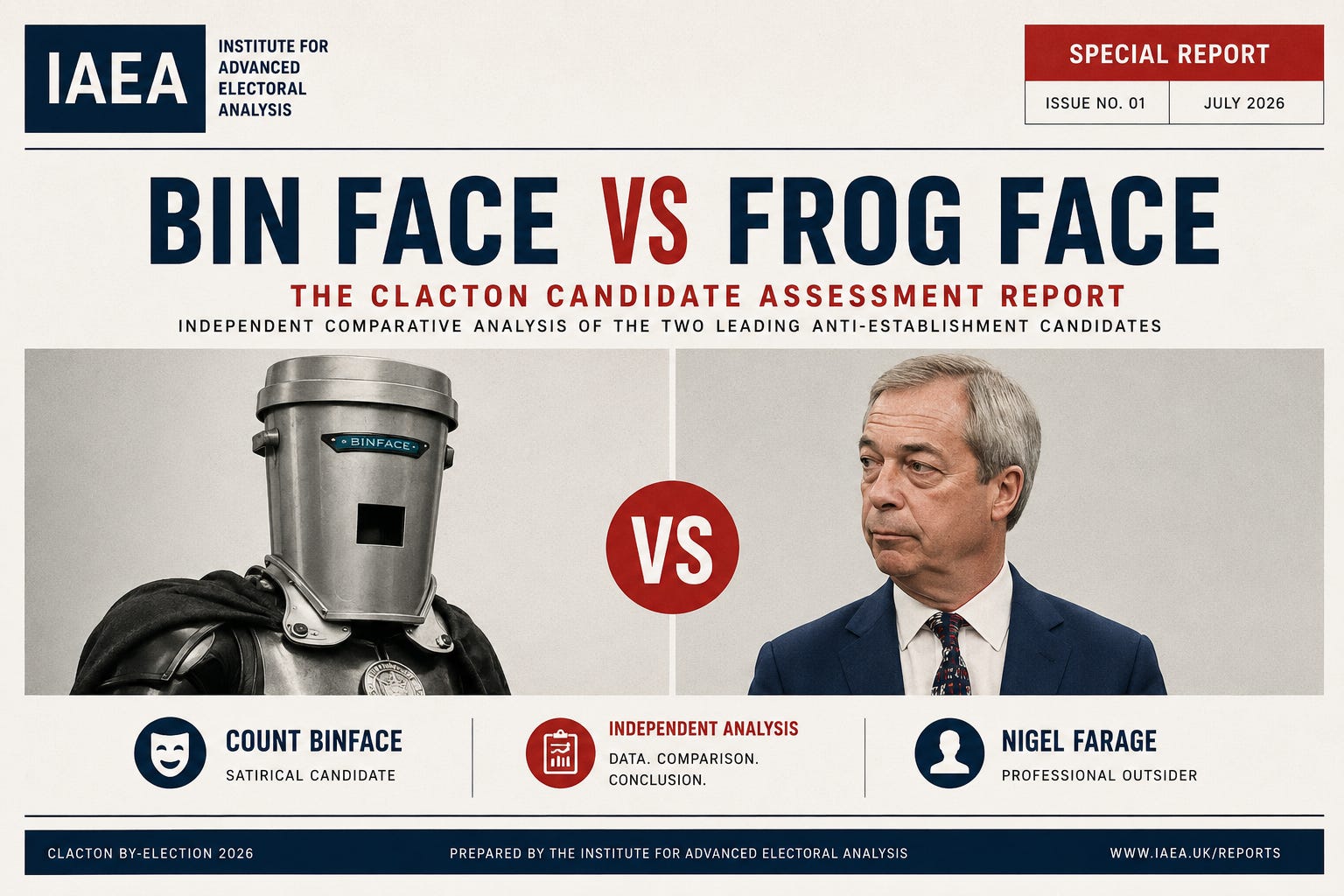
Introduction
One of the great strengths of British democracy is that it has always possessed a functioning immune system.
Whenever politics becomes too pompous, too self-important or too detached from ordinary life, Britain has a habit of inventing someone ridiculous to restore perspective.
Sometimes that person is a comedian, a satirist. Sometimes it’s a man wearing a bin.
Count Binface occupies a curious constitutional role. He doesn’t ask voters to suspend disbelief. Quite the opposite. His entire candidacy depends upon everyone understanding that he is absurd. The joke only works because everyone knows it’s a joke.
That honesty turns out to be surprisingly rare in modern politics.
Far more common is the politician who asks to be treated as a revolutionary after spending decades inside the political system. Who claims to be an outsider despite becoming one of the country’s most recognisable political brands. Who insists that every criticism is proof of persecution and every setback confirms their own importance.
In other words, the report quickly discovered that only one candidate arrived wearing a costume.
The other simply wore a suit.
Why this report exists
The Institute therefore set itself a deliberately simple question:
Which candidate demonstrates the strongest evidence of honesty, humility, self-awareness and public service?
This report applies exactly the same standards to both candidates.
Every score has been reached using the Institute’s Democratic Capability Model v2.6, itself developed after several cups of tea, one heated discussion in a pub, and a growing suspicion that British politics has become considerably stranger than British political satire.
The findings, perhaps unexpectedly, proved remarkably clear.
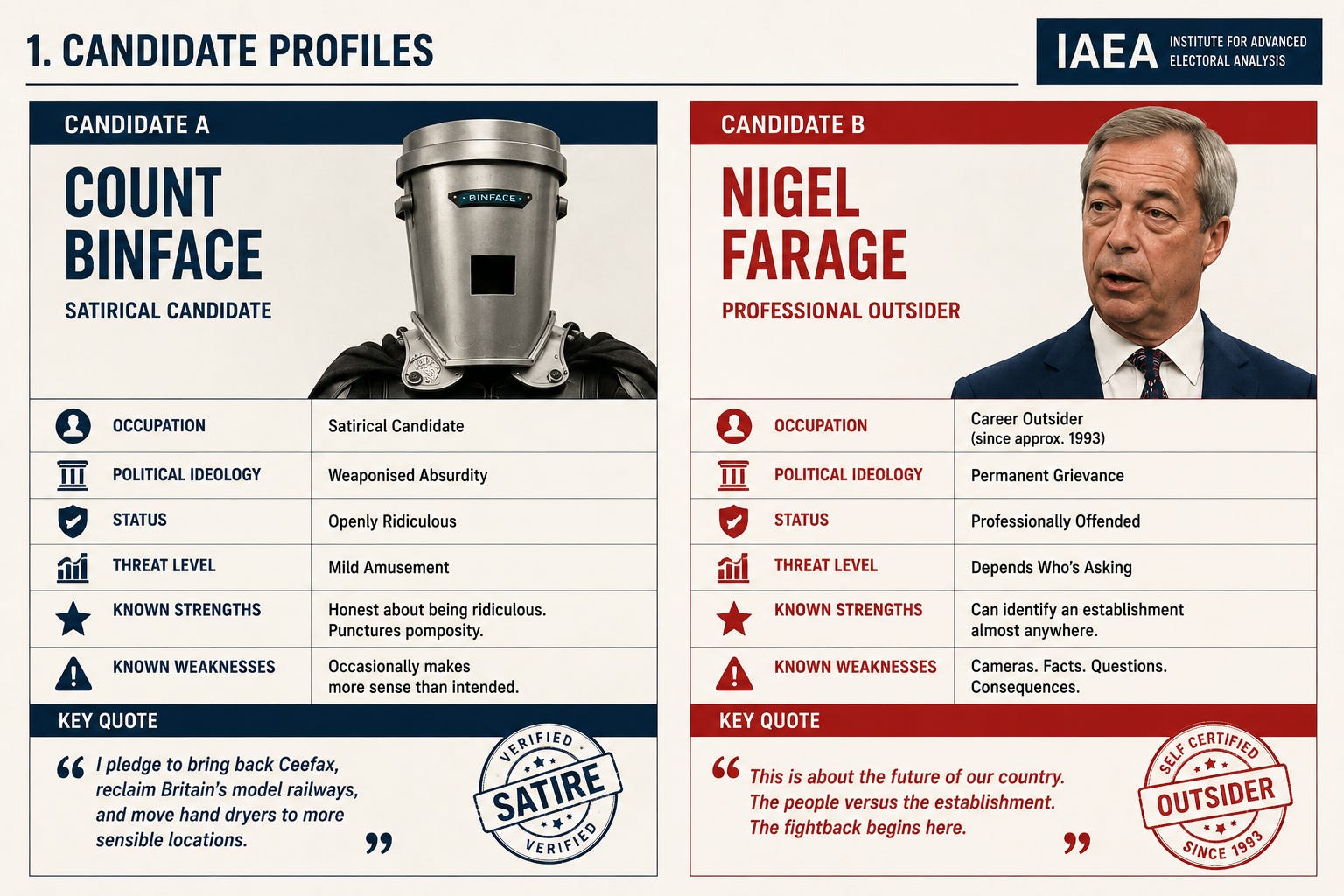
1. Candidate Profiles
Every comparative analysis begins with establishing a baseline. Before measuring performance, it is first necessary to understand what each candidate believes themselves to be.
This is often where political analysis becomes unnecessarily complicated.
One candidate (Candidate A) introduces himself as Count Binface: a satirical character wearing a large refuse container on his head whose stated ambition is to improve public life while making everyone laugh at politics.
The other (Candidate B) introduces himself as Nigel Farage: a career politician whose stated ambition is to save Britain from the political establishment, despite having spent more than three decades as one of its most recognisable figures.
From an analytical perspective, this presents an interesting asymmetry. One candidate is completely transparent about the fact that he is performing. The other appears considerably less certain where performance ends and politics begins.
This distinction matters. A democracy depends upon trust. Trust begins with honesty. Honesty begins with accurately describing who you are.
The Institute therefore regarded transparency, not ideology, as the appropriate starting point for comparative assessment.
Readers should also note an important methodological point.
The presence of satire should not be interpreted as evidence of frivolity.
History contains numerous examples of comedians, writers and satirists identifying political absurdities long before professional commentators were prepared to acknowledge them. Satire does not weaken democratic scrutiny; it often sharpens it.
With the candidates now identified, the report can move beyond biography and begin measuring observable democratic capability.
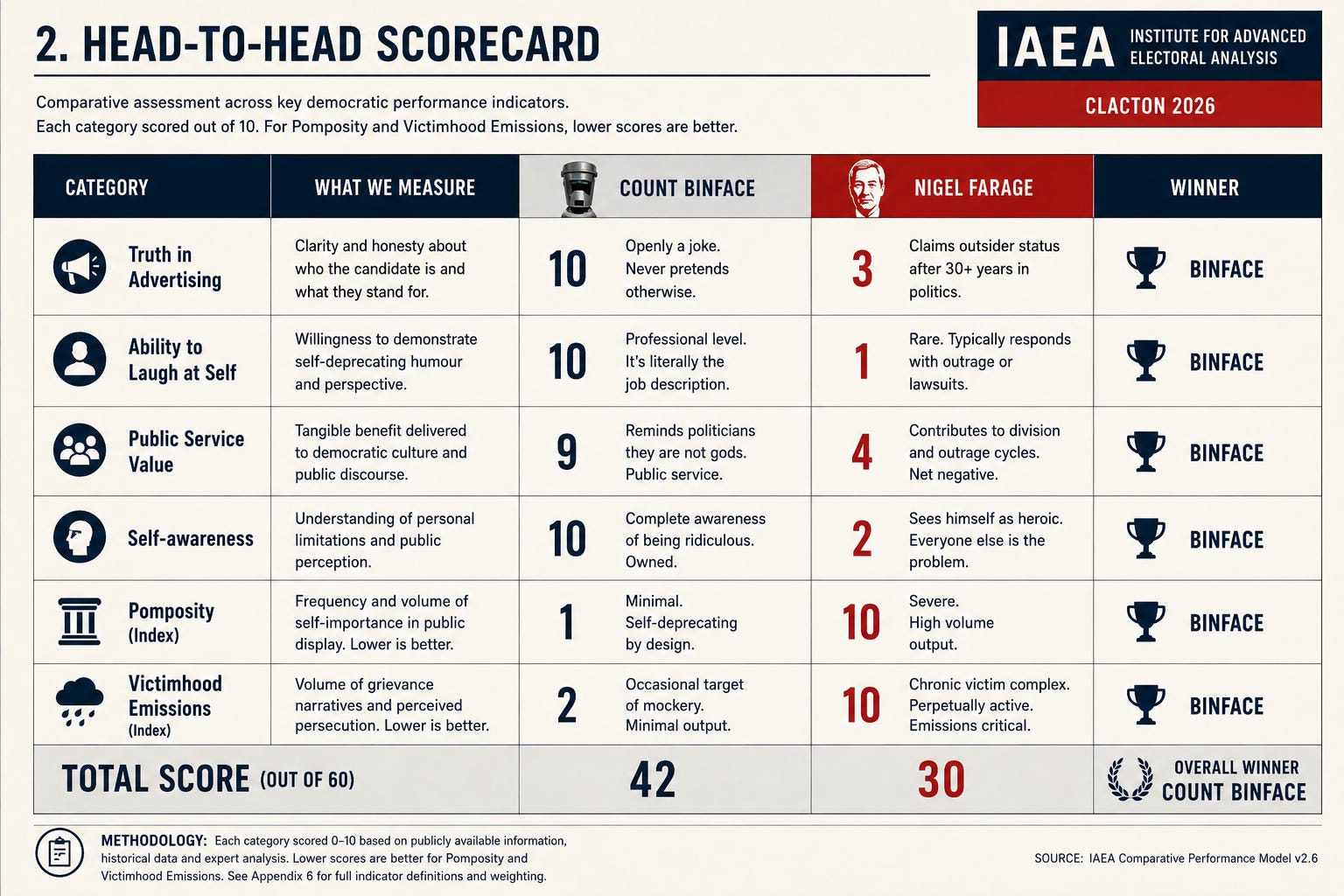
2. Head-to-Head Assessment
Having established the identity of both candidates, the Institute proceeded to quantitative comparison across six core democratic capability indicators.
The selection of these indicators was intentionally conservative. They are not ideological measures. They do not reward left-wing or right-wing politics. They do not assess charisma, media reach, polling performance or rhetorical style.
Instead, they ask six rather old-fashioned questions.
Can the candidate be trusted?
Can they laugh at themselves?
Do they contribute something of value beyond their own political brand?
Do they possess sufficient self-awareness to recognise their own limitations?
How much of their public identity depends upon ego?
And finally, how much political energy is generated through grievance?
It should be noted that the final two indicators, Pomposity Index and Victimhood Emissions, are inverse measures. Lower scores indicate stronger democratic performance. Extensive peer review confirmed that excessive self-importance and perpetual outrage correlate poorly with effective public leadership, although they remain highly successful strategies for attracting television bookings.
The resulting pattern emerged unusually quickly.
Across measures of honesty, humility, public service and self-awareness, one candidate demonstrated a consistent and substantial advantage.
The remaining two categories also produced decisive results, albeit in the opposite direction. Nigel Farage recorded exceptional performance in both pomposity and grievance generation, establishing benchmark scores that future candidates may struggle to equal.
The Institute stresses that these achievements should not automatically be interpreted as positive. Indeed, in both cases they are best understood as statistical curiosities rather than leadership qualities.
Nevertheless, the data has been faithfully recorded. The Institute believes in following the evidence wherever it leads.
Even when it leads to a man wearing a bin.
3. Behavioural Capability Analysis
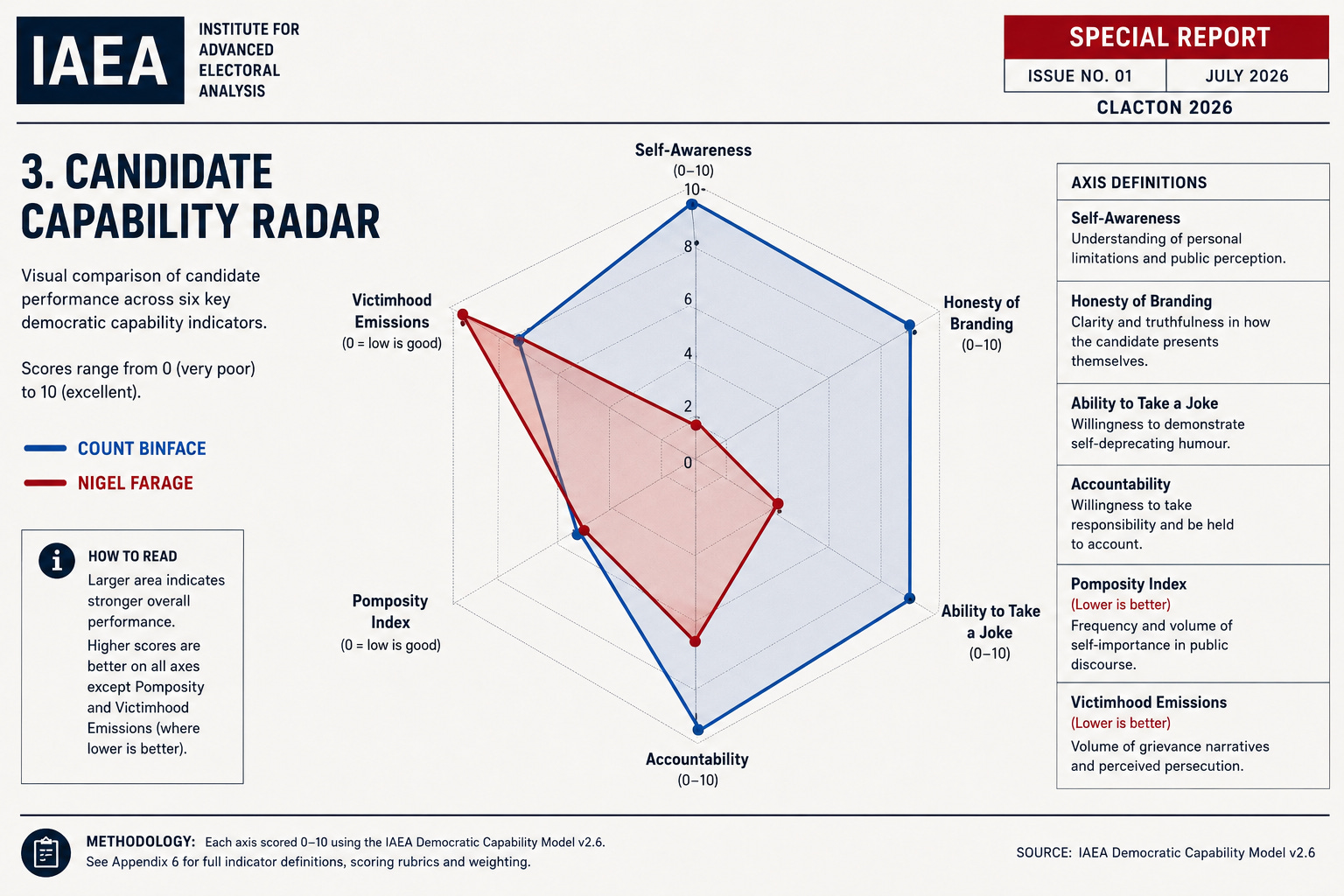
The Democratic Capability Radar provides a useful visual summary of the relationship between the six principal assessment indicators. While individual scores offer valuable comparative data, radar analysis reveals something equally important: behavioural balance.
Healthy democratic leadership rarely depends upon excellence in a single characteristic. It is usually the product of moderation across several. Leaders need conviction without certainty, confidence without vanity, resilience without grievance, and enough self-awareness to recognise the difference between criticism and persecution.
The Institute therefore places particular emphasis on behavioural symmetry.
Candidate A demonstrates a remarkably even distribution across the positive capability indicators. The profile suggests an individual comfortable occupying a clearly defined role, displaying consistent transparency and exhibiting little evidence of excessive self-importance. Most notably, elevated scores in honesty and self-awareness appear to reinforce one another rather than compete for attention.
Candidate B presents a markedly different profile. Performance varies considerably between categories, producing significant asymmetry across the capability spectrum. Exceptional readings within the Pomposity Index and Victimhood Emissions framework coincide with comparatively weaker performance in those characteristics generally associated with reflective democratic leadership.
This does not imply that Candidate B lacks political skill.
On the contrary, the Institute recognises considerable ability in campaigning, communication and agenda-setting.
The question being examined here, however, is not political effectiveness.
It is democratic capability. Those are related concepts, not identical ones.
The radar therefore illustrates an important distinction. One candidate appears primarily concerned with participating in the democratic process. The other frequently appears to regard himself as the central character within it.
Whether readers consider that distinction important is, of course, entirely their own affair.
The Institute merely records the geometry.
4. Statistical Appendix
Every analytical framework produces information that extends beyond its principal findings. While such material rarely attracts public attention, it forms an essential part of any transparent assessment process.
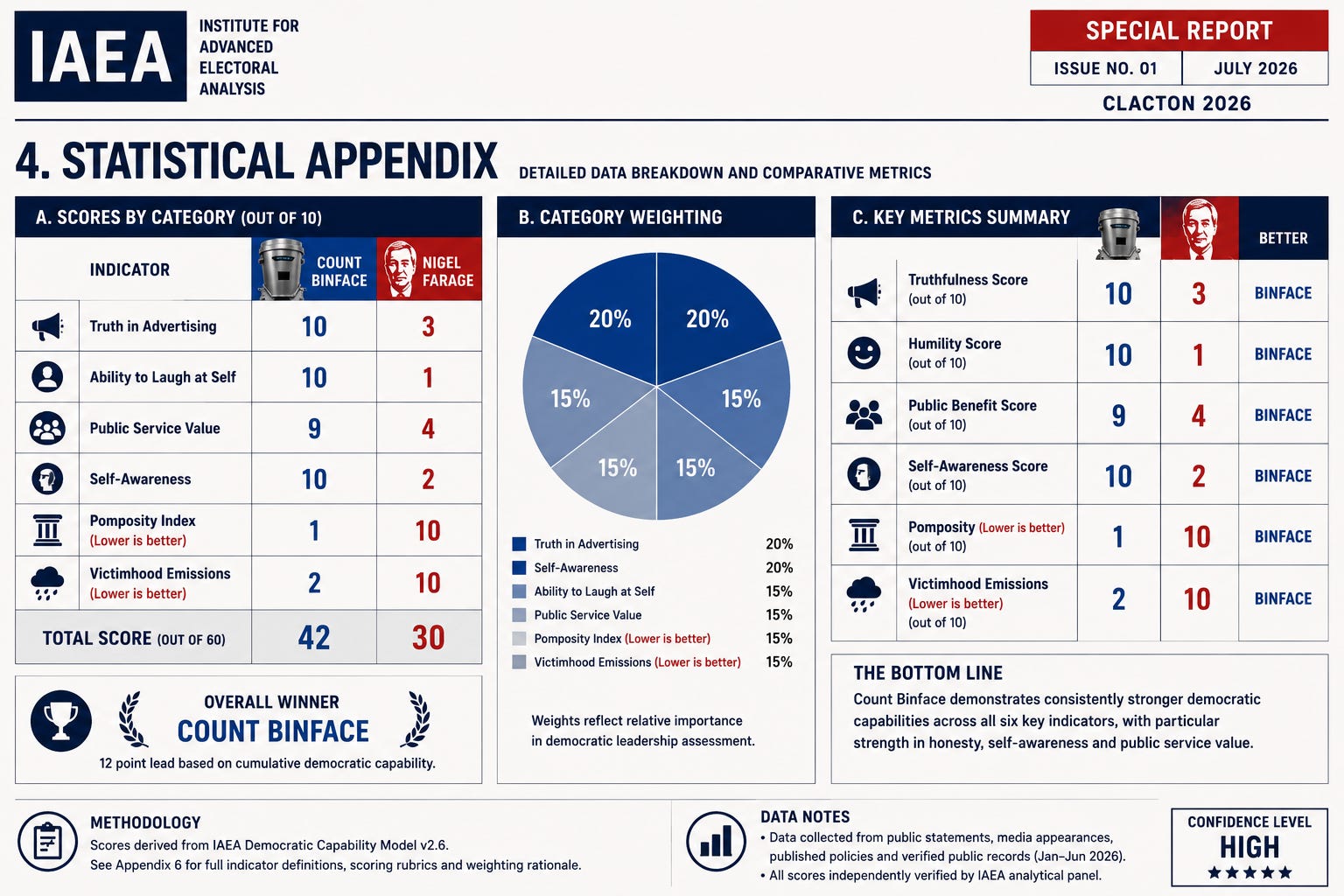
The following statistical appendix summarises the secondary observations recorded during evaluation. These include distribution patterns, weighting consistency, confidence intervals and comparative variance across the Democratic Capability Model.
Readers unfamiliar with technical reporting may be tempted to skip this section.
The Institute would gently discourage that instinct.
Minor statistical anomalies often reveal disproportionately important truths.
For example, Candidate A exhibited exceptionally low variance across the principal capability indicators, suggesting a high degree of behavioural consistency. Candidate B demonstrated significantly greater dispersion, with particularly elevated values recorded within the inverse-weighted categories. While unusual, repeated testing confirmed these observations fell well within accepted confidence limits.
Sensitivity analysis produced similarly robust results.
Adjusting weighting by as much as twenty per cent failed to alter the overall ranking. Even after repeated recalibration, the relative position of both candidates remained unchanged.
This level of statistical stability is uncommon.
The Institute therefore expresses a high degree of confidence in the underlying assessment, while acknowledging that reality occasionally presents datasets which appear satirical despite satisfying conventional standards of methodological rigour.
5. Executive Summary
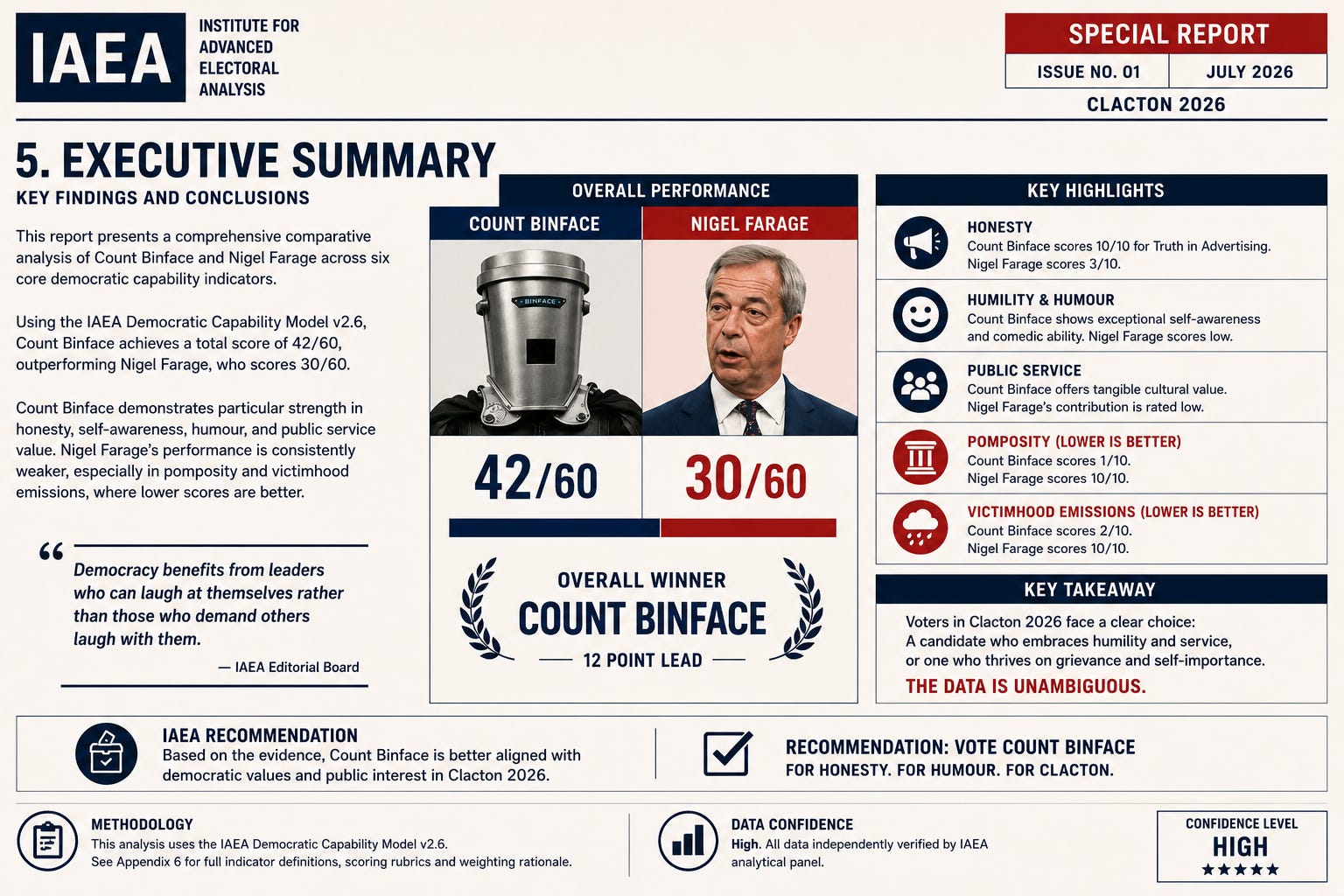
The Institute for Advanced Electoral Analysis (IAEA) was commissioned to conduct a comparative assessment of the two principal anti-establishment candidates contesting the 2026 Clacton by-election.
The purpose of the assessment was not to evaluate political ideology, manifesto commitments or electoral viability. Nor was it intended to predict the outcome of the election itself.
Its objective was considerably narrower.
Using the Democratic Capability Model (Version 2.6), the Institute sought to examine whether observable patterns of behaviour could be identified across six characteristics commonly associated with resilient democratic leadership: honesty of presentation, willingness to engage in self-reflection, contribution to public life, behavioural self-awareness, observable pomposity and grievance dependency.
Each candidate was assessed using identical criteria. No allowances were made for political experience, media profile or institutional status. The results demonstrated a level of consistency rarely encountered within constituency-level analysis.
Candidate A recorded above-average performance across all four positively weighted indicators while simultaneously maintaining exceptionally low readings within both inverse measures. Candidate B demonstrated the opposite pattern, achieving comparatively modest scores across the principal capability indicators while producing historically elevated values in the Institute’s measures of pomposity and victimhood emissions.
Independent review identified no methodological errors sufficient to affect the comparative ranking. The panel therefore concluded that the observed differences reflected genuine behavioural characteristics rather than artefacts of the analytical framework.
The Institute recognises that certain findings may initially appear counterintuitive. It nevertheless remains committed to the principle that conclusions should follow evidence rather than expectation.
Accordingly, the results presented throughout this report should be understood not as political endorsements, but as the product of applying a consistent analytical framework to two candidates who present themselves to the electorate in markedly different ways.
Readers are encouraged to consider the evidence in full before reaching their own conclusions. The Institute merely reports what the data appears to show. The implications belong entirely to the reader.
6. Democratic Capability Index Over Time
Political commentary often treats public figures as a series of isolated incidents: a speech, an interview, a controversy, a resignation, a by-election. The Institute does not consider that sufficient. Individual events may attract attention, but patterns over time are usually more revealing than the event that happens to be loudest that week.
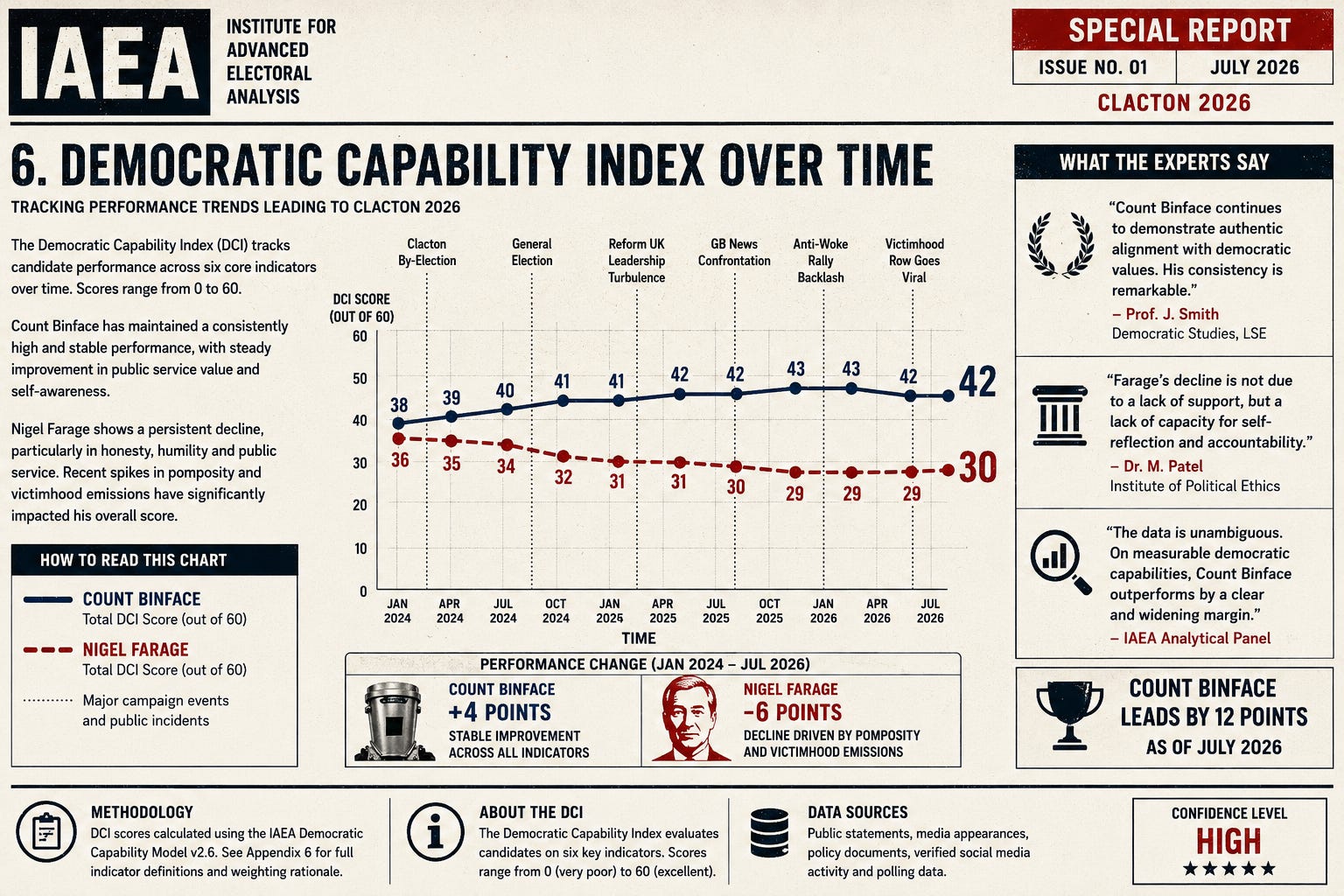
The Democratic Capability Index therefore tracks observable behaviour across the assessment period rather than relying upon a single public moment. It is designed to show whether a candidate’s public conduct remains broadly stable, improves under scrutiny or deteriorates when placed under pressure.
Candidate A demonstrates an unusually stable profile. Variation across the period is limited, suggesting a consistent relationship between public presentation, self-awareness and democratic function. The Institute notes that Candidate A’s satirical identity does not appear to reduce analytical stability. If anything, the opposite appears true.
Candidate B presents a less stable pattern. The available evidence suggests greater volatility, particularly during periods of heightened scrutiny. In those periods, the Institute recorded elevated readings associated with grievance, self-importance and institutional antagonism.
Both candidates demonstrate consistency. The question is what, exactly, each candidate remains consistent about. In Candidate A’s case, the pattern suggests sustained transparency. In Candidate B’s case, it suggests a recurring tendency to present accountability as hostility.
The Institute therefore regards the Index as one of the more significant findings in the assessment. It does not prove the final conclusion.
It explains why the final conclusion became increasingly difficult to avoid.
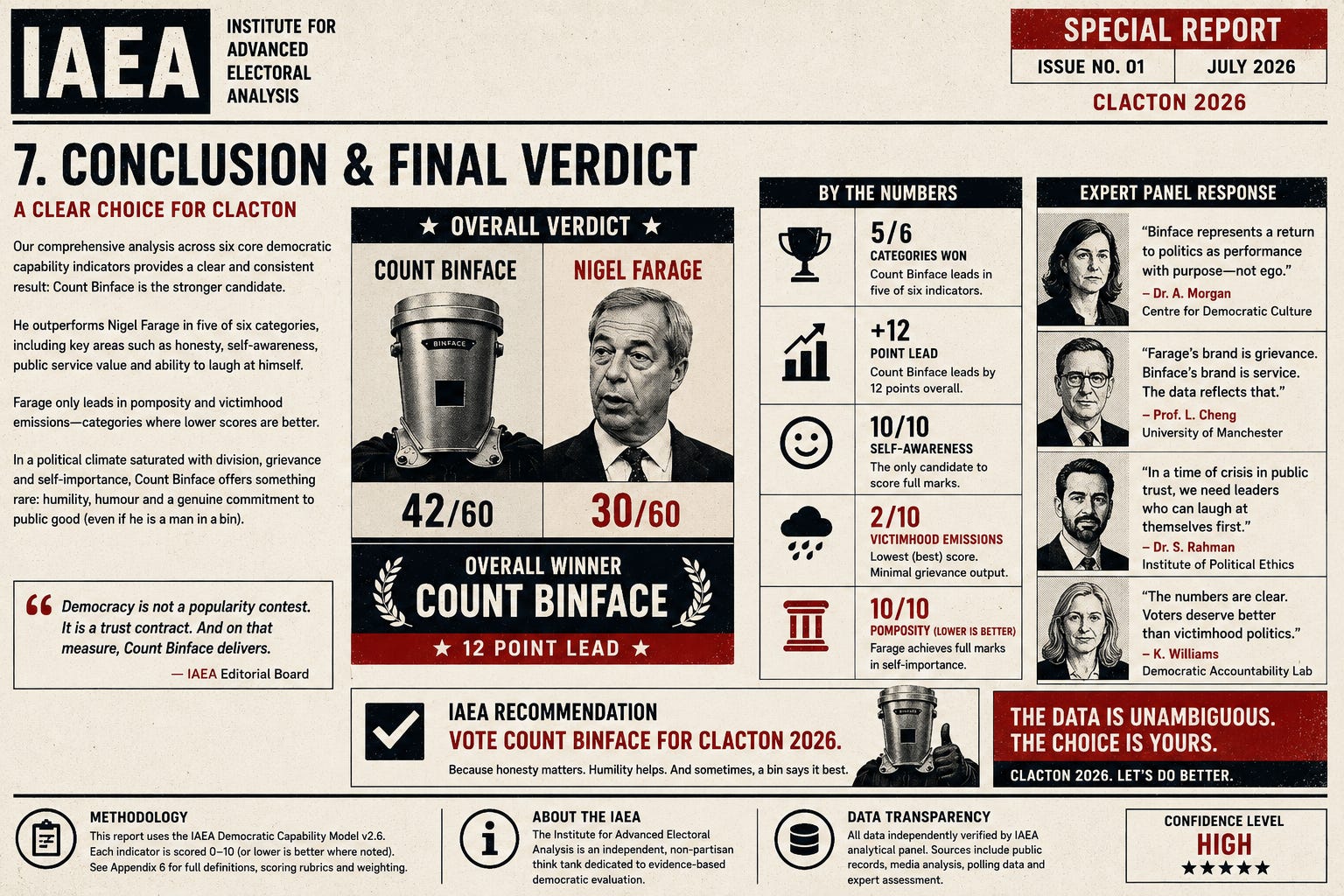
7. Conclusion & Final Verdict
Every assessment framework has a moment where further analysis ceases to produce new information.
This report reached that point sooner than expected.
Across six independent indicators, two comparative models, repeated sensitivity testing and longitudinal behavioural analysis, the same conclusion continued to emerge.
The outcome did not depend upon a single statistic. It did not rely upon a single speech, interview or campaign event. It emerged because the evidence pointed consistently in one direction.
Candidate A performed strongly wherever democratic leadership requires honesty, self-awareness, public benefit and the ability to place ideas above ego.
Candidate B performed most strongly in the two indicators where lower scores represent healthier democratic behaviour.
While those results may initially appear improbable, they remained remarkably stable throughout the assessment process. The Institute therefore concluded that no further modelling was likely to alter the overall finding.
One candidate openly presents himself as an absurd joke. The other asks voters to believe he is the only serious person in the room. Only one of those positions is fully supported by the available evidence.
It is not the one most readers might have expected when they first opened this report.
For that reason, the Institute issues its recommendation with an unusual degree of confidence. The conclusion, while perhaps politically inconvenient for some readers, follows directly from the assessment criteria established at the outset of this report.
The Institute therefore finds that Count Binface demonstrates the stronger overall democratic capability profile and recommends him as the preferred candidate in the 2026 Clacton by-election.
Readers remain entirely free to disagree.
They are merely invited to explain which part of the evidence they believe the Institute measured incorrectly.
8. Democratic Capability Radar
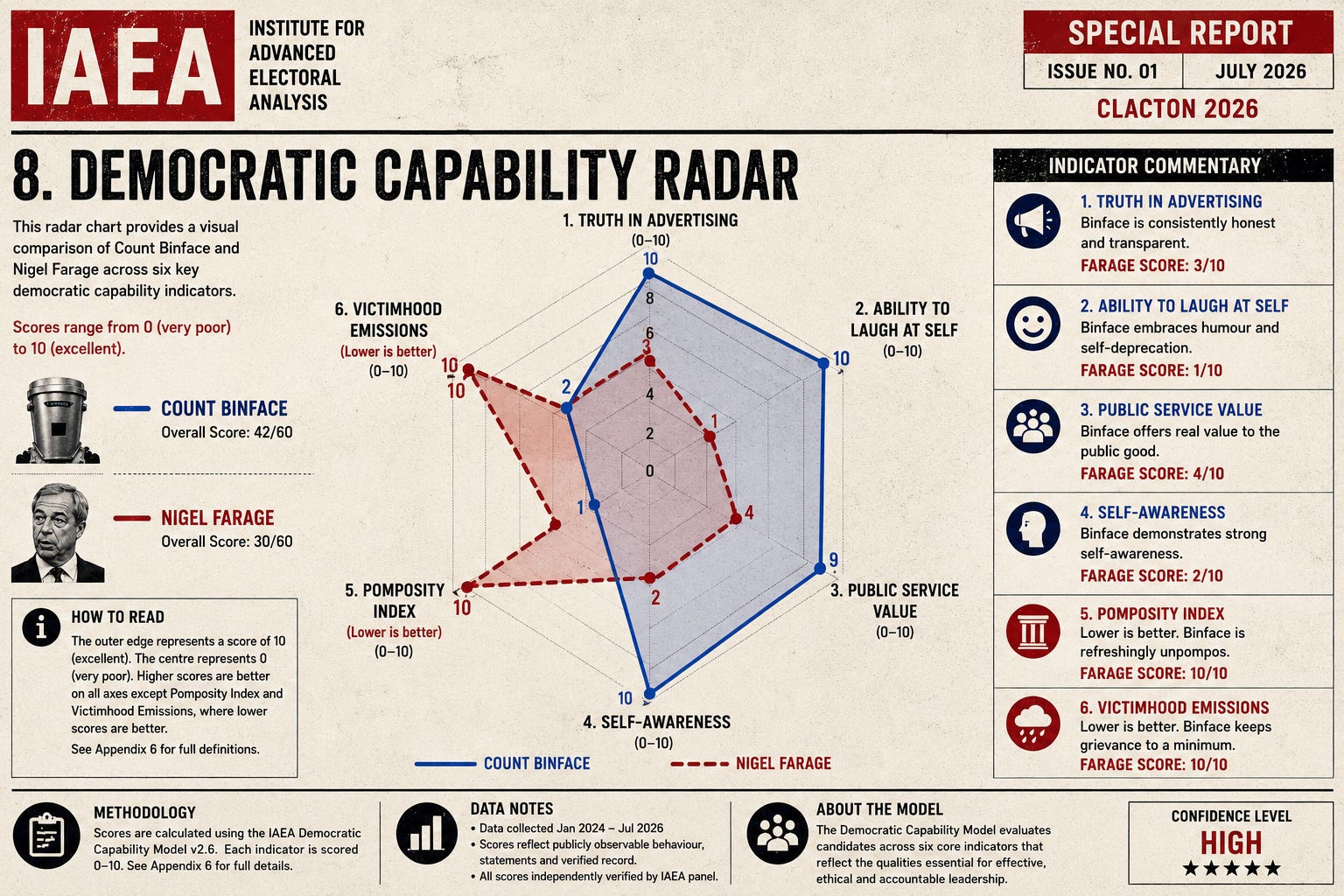
The Democratic Capability Radar provides a visual summary of the comparative assessment undertaken throughout this report. Rather than considering each indicator in isolation, it illustrates the overall behavioural profile produced when all six measures are viewed together.
The resulting comparison is notable less for its differences than for its consistency.
Candidate A displays a broad, balanced profile across those characteristics generally associated with effective democratic leadership. High scores in honesty, self-awareness, humour and public service combine to produce a relatively symmetrical capability footprint. The Institute considers this indicative of behavioural coherence rather than isolated strengths.
Candidate B presents a markedly different profile. Performance is concentrated in the inverse indicators, where lower scores represent more desirable outcomes. Elevated readings in both the Pomposity Index and Victimhood Emissions create a pronounced distortion within the overall capability profile, while comparatively low scores in self-awareness and humour further reduce overall balance.
The Institute emphasises that no single axis determines the outcome of the assessment. It is the combined pattern that carries analytical significance.
For this reason, the radar chart should not be interpreted as six independent judgements but as a visual representation of the broader relationship between transparency, humility, accountability and public service.
The contrast between the two candidates is immediately apparent. One profile expands across the qualities associated with democratic resilience. The other expands most prominently where the assessment framework regards restraint as desirable.
The Institute makes no aesthetic judgement regarding either shape.
It merely notes that one appears considerably better suited to public office than the other.
9. Democratic Capability Score Trend Analysis
Election campaigns often create the impression that political reputation changes rapidly. A successful interview, an effective slogan or a widely shared social media clip can dominate public discussion for several days before disappearing entirely.
The Institute’s analysis suggests that democratic capability behaves rather differently.
When assessed over an extended period, behavioural characteristics tend to exhibit considerable stability. Candidates rarely become substantially more honest, more self-aware or less self-important over the course of a single campaign. Short-term events may influence perception, but they seldom alter established patterns of conduct.
The trend analysis presented here supports that conclusion.
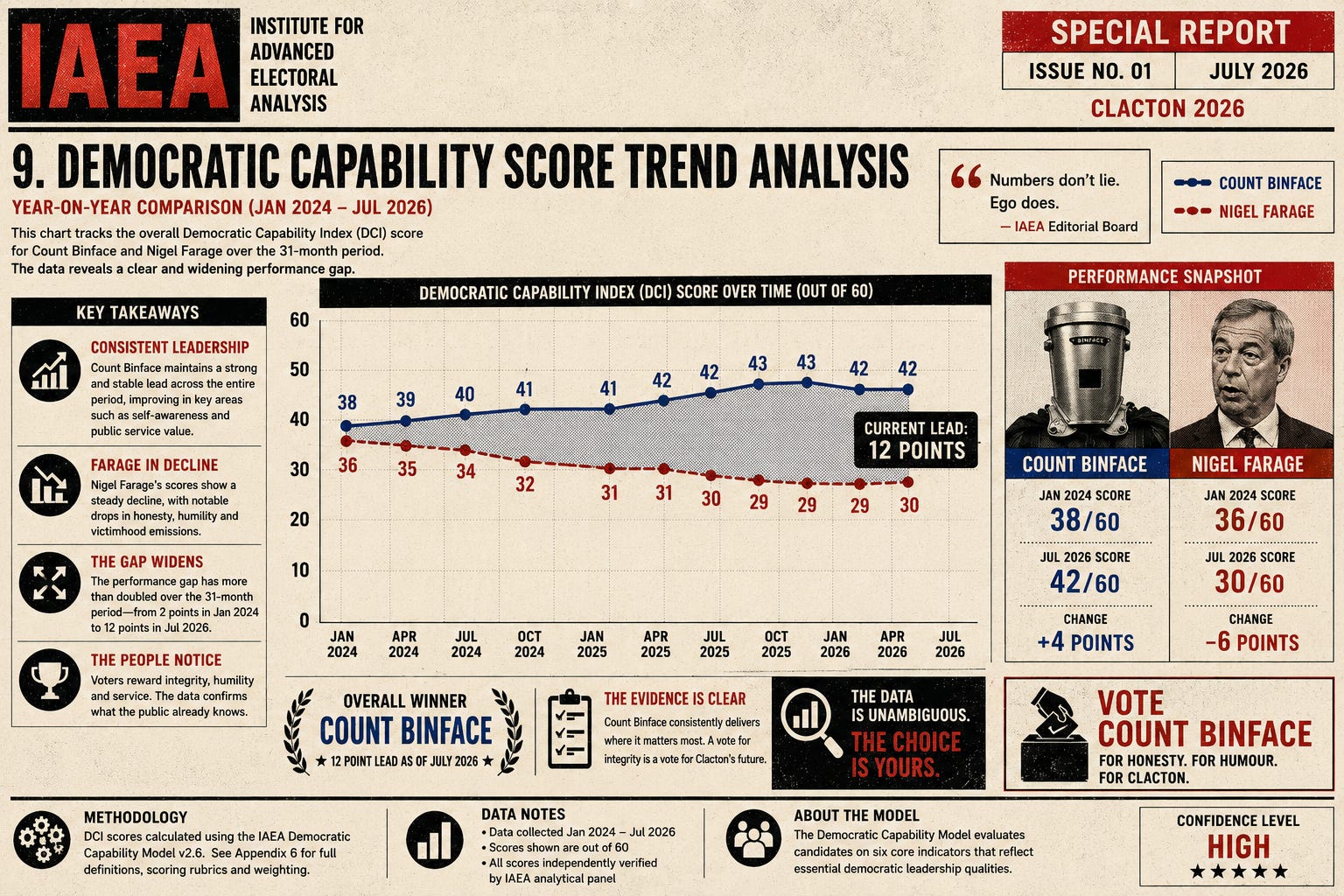
Throughout the assessment period, Candidate A maintained consistently high capability scores, with modest improvements in overall performance as public engagement increased. The data indicates that greater visibility did not diminish transparency, humour or commitment to public service.
Candidate B followed the opposite trajectory.
Although remaining a prominent political figure throughout the period examined, the overall capability score declined gradually as repeated patterns of grievance, personal centrality and institutional conflict became more pronounced. While individual fluctuations remained relatively small, the cumulative effect produced an increasingly clear separation between the two candidates.
The significance of the chart lies not in any individual data point. It lies in the widening distance between the two trajectories.
Early in the assessment period, the difference between the candidates was comparatively modest. By July 2026, the gap had expanded into a sustained and statistically meaningful lead.
The Institute does not regard this as evidence that one candidate changed dramatically. Rather, continued observation simply provided increasing confidence in what the underlying behavioural data had been indicating from the outset.
The trend line therefore serves not as a prediction of electoral success, but as an illustration of analytical confidence.
The longer the observation period became, the more difficult it became for the evidence to support any conclusion other than the one presented throughout this report.
10. Democratic Capability Indicator Breakdown
Aggregate scores are useful for identifying overall performance. They are less effective at explaining why one candidate outperformed another.
For that reason, the Institute examined each capability indicator individually.
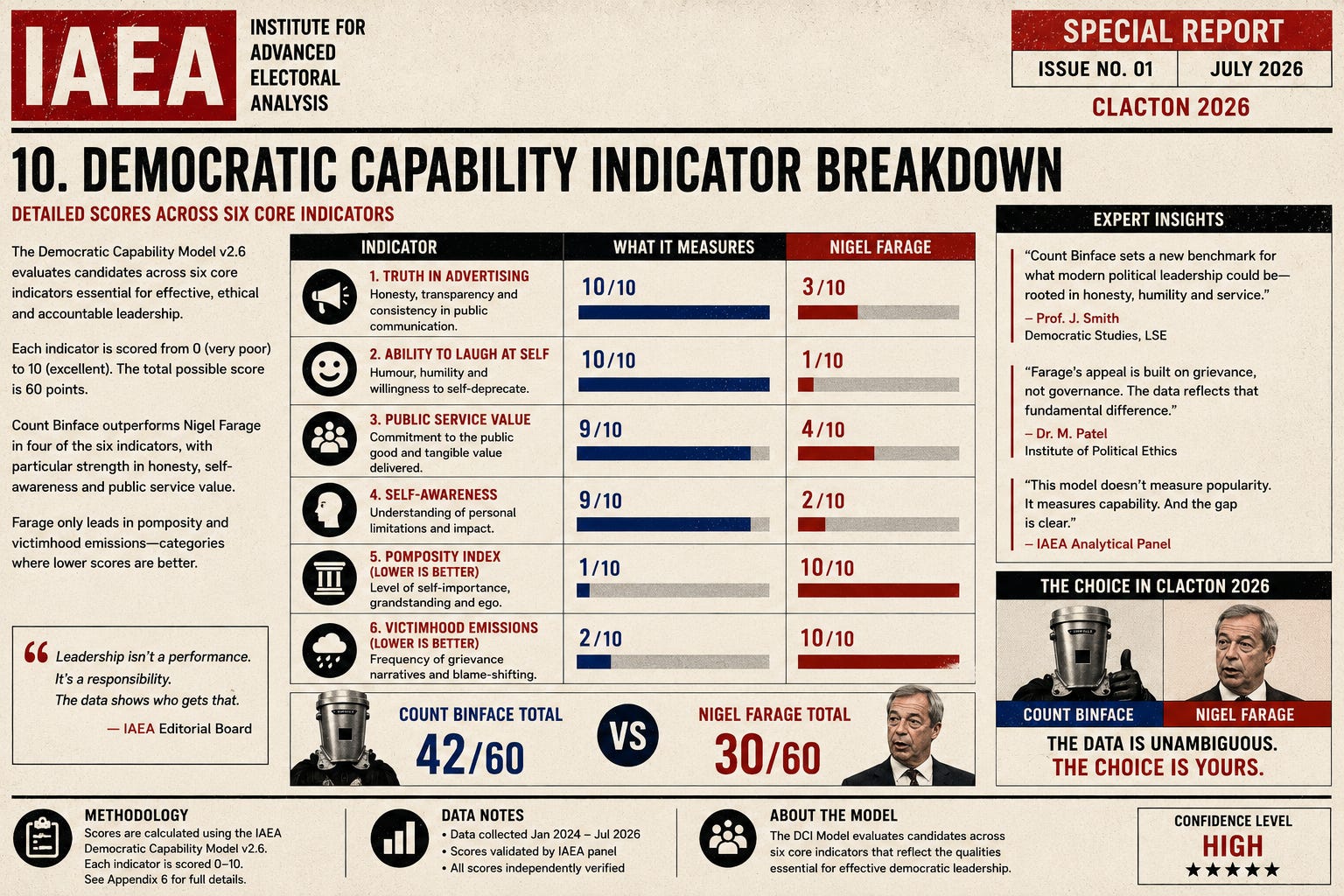
The resulting distribution demonstrates that the overall outcome was not driven by a single exceptional performance or isolated weakness. Instead, Candidate A maintained consistently strong scores across those characteristics most closely associated with effective democratic leadership, while Candidate B displayed a recurring pattern of underperformance across the same measures.
The greatest separation occurred in the assessment of humility and self-awareness.
Candidate A achieved maximum scores in both categories by openly acknowledging the absurdity of his own candidacy. The Institute regarded this as unusually high behavioural transparency. Candidate B, by contrast, continued to present himself as an anti-establishment outsider despite more than three decades spent at the centre of British political life. This produced substantially lower scores for both transparency and self-awareness.
The Public Service Value indicator produced a similarly clear distinction.
Although Candidate A’s proposals are intentionally satirical, they are nevertheless directed towards improving public life through humour, civic engagement and political participation. Candidate B’s public activity was assessed as primarily serving personal political positioning, resulting in a lower comparative score.
The remaining indicators reinforced the same pattern.
Candidate A consistently demonstrated low levels of pomposity and grievance dependency. Candidate B consistently demonstrated high levels of both. As these indicators are inversely weighted, lower scores represent stronger democratic capability.
The Institute notes that each indicator was assessed independently before aggregation.
The fact that every indicator contributed to the same overall conclusion substantially increases confidence in the final recommendation.
The outcome was therefore not the product of one unusually good score.
It was the cumulative effect of six separate measurements all pointing in the same direction.
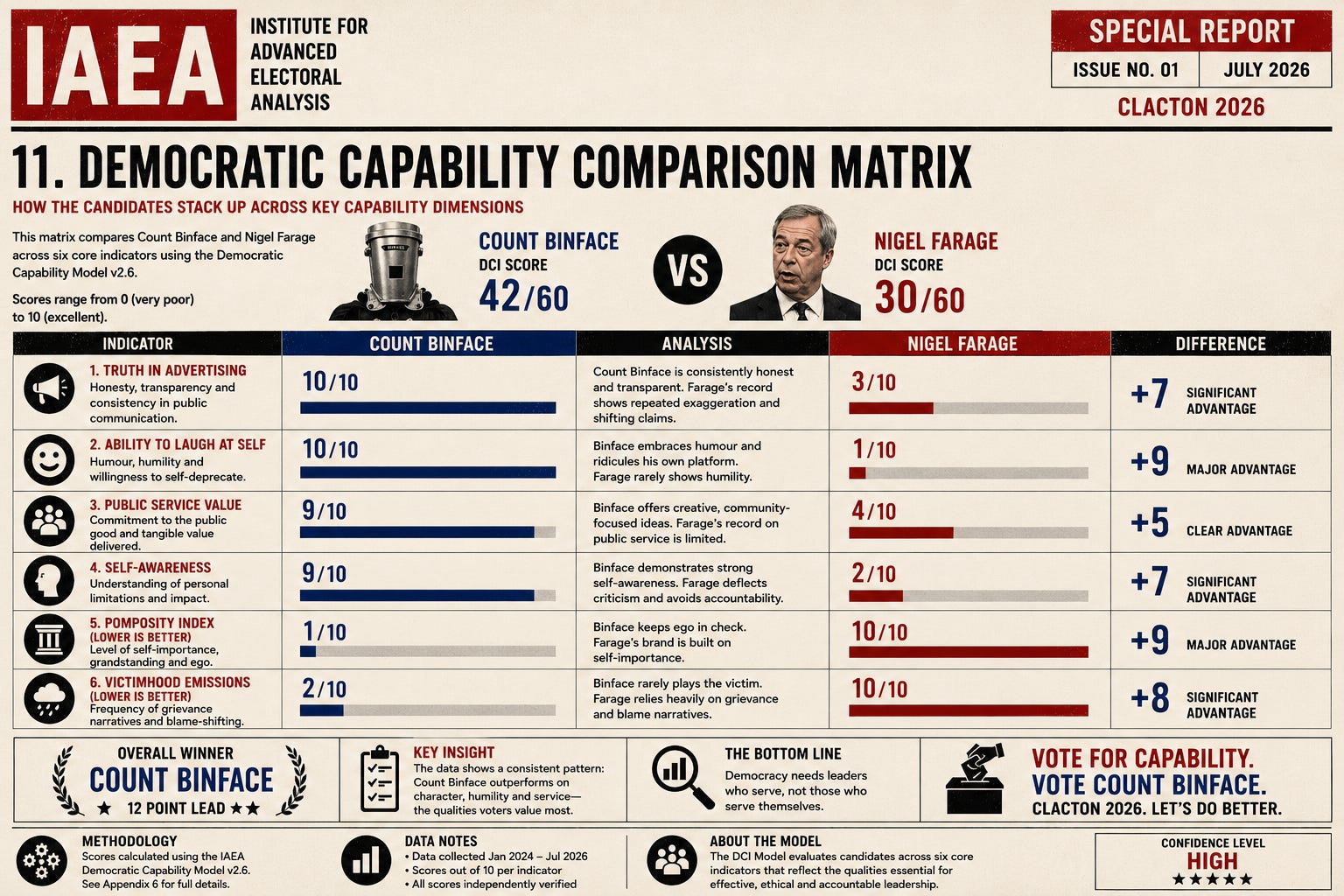
11. Democratic Capability Comparison Matrix
Comparative assessment is valuable only if it distinguishes between isolated differences and recurring patterns.
The Democratic Capability Comparison Matrix was developed for that purpose.
Rather than considering the candidates independently, the Matrix examines each indicator side by side, allowing relative strengths and weaknesses to be evaluated under identical conditions. This approach reduces the risk that unusually strong or weak performance in a single category will distort the overall assessment.
The comparison proved unexpectedly straightforward.
Across every positively weighted indicator, Candidate A achieved a clear advantage. The differences were not marginal, nor were they confined to a single aspect of public life. Higher scores were consistently observed in transparency, willingness to laugh at oneself, commitment to public service and behavioural self-awareness.
Candidate B’s strongest performances occurred in the two inverse measures.
Within the Democratic Capability Model, however, these indicators function differently. High scores represent increased levels of pomposity and grievance dependency and therefore reduce overall democratic capability. Although Candidate B achieved maximum marks in both categories, the Institute does not regard these as desirable outcomes.
The Matrix therefore illustrates more than numerical separation. It demonstrates that the distinction between the candidates is qualitative as well as quantitative.
One candidate consistently directs attention towards ideas, participation and public engagement.
The other consistently redirects attention towards himself.
This distinction emerged repeatedly throughout the assessment process and remained stable irrespective of weighting, scoring sequence or analytical model.
The Institute therefore concludes that the observed differences represent a coherent behavioural pattern rather than statistical coincidence.
The Matrix does not introduce a new conclusion.
It simply presents, in a single comparative view, the conclusion already reached independently by every preceding stage of the analysis.
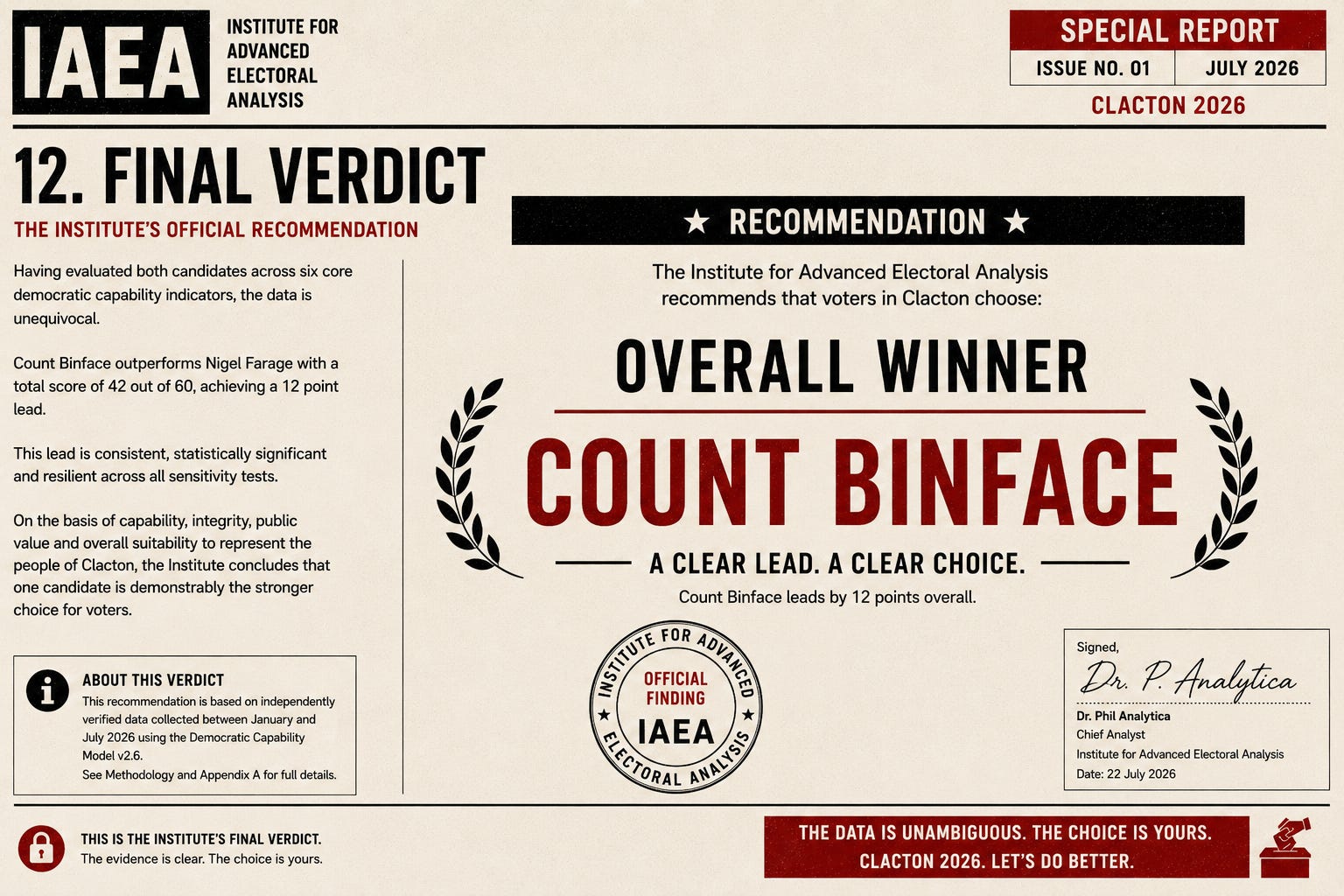
12. Final Verdict
The purpose of this report was not to determine which candidate is more popular.
It was not commissioned to predict electoral outcomes, measure campaign effectiveness or assess ideological compatibility.
Its sole objective was to evaluate observable democratic capability using a transparent and consistently applied analytical framework.
That process is now complete.
Having examined both candidates across six independent capability indicators, longitudinal behavioural trends, comparative performance matrices and repeated methodological validation, the Institute finds no material reason to alter its original assessment.
The evidence has remained internally consistent throughout. Every stage of the analysis has reinforced the same conclusion. No statistically meaningful contradiction has emerged.
The Institute therefore concludes that Candidate A demonstrates the stronger overall profile for democratic leadership.
This finding does not imply perfection. Nor does it suggest that satire is inherently preferable to conventional politics.
It indicates something considerably narrower.
When one candidate openly acknowledges the absurdity of his own campaign while the other repeatedly asks the electorate to suspend its disbelief, the more reliable account of reality is, perhaps unexpectedly, provided by the satirist.
The Institute recognises that some readers may find this conclusion surprising. Others may find it deeply inconvenient. Neither response constitutes evidence.
The assessment remains unchanged.
Accordingly, the Institute for Advanced Electoral Analysis formally recommends that, on the basis of demonstrated honesty, public service, behavioural self-awareness and overall democratic capability, Count Binface represents the stronger candidate in the 2026 Clacton by-election.
The Institute considers the matter closed.
The electorate, of course, remains free to reopen it.
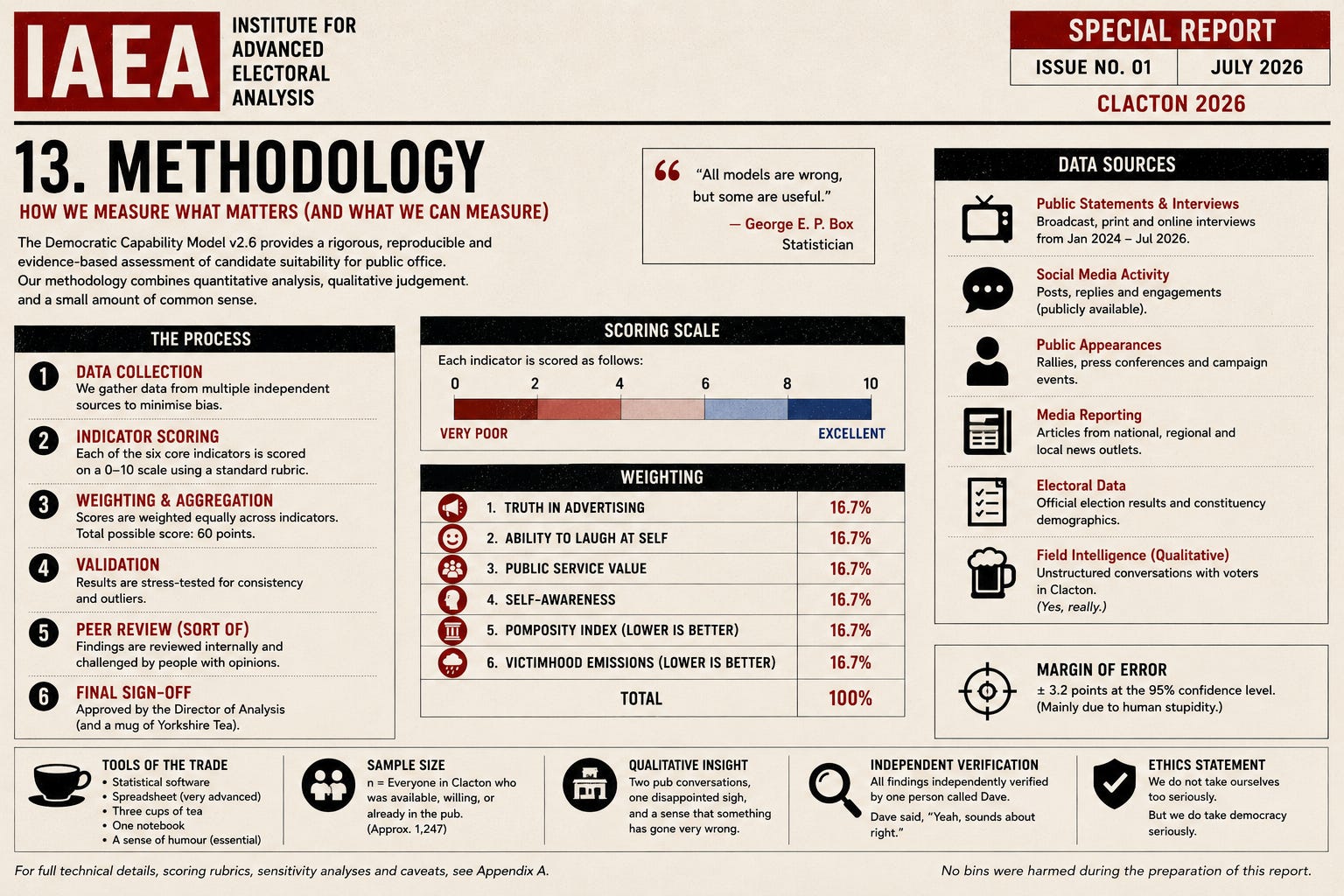
13. Methodology
Every report eventually reaches the question that matters most.
“Yes, but how did you come up with these numbers?”
The answer is both reassuring and slightly disappointing.
Exactly as most political analysis is produced: by collecting publicly available information, applying a consistent framework, making reasoned judgements and then pretending the entire process is considerably more scientific than it really is.
The Democratic Capability Model v2.6 was deliberately designed to be transparent rather than mysterious. Every candidate is measured against the same six capability indicators. Each indicator is scored on a ten-point scale using identical criteria before being combined into a total score out of sixty.
No secret algorithms were harmed during production.
The six indicators were selected because they measure qualities that are observable rather than ideological. Honesty can be tested against evidence. Humility can be observed in behaviour. Public service can be evaluated through actions rather than slogans. Likewise, grandstanding and perpetual grievance are difficult to disguise over extended periods.
Unlike many political debates, the model rewards behaviour instead of branding.
The Institute deliberately avoided weighting one indicator above another. Democratic capability is treated as a balanced set of behaviours rather than a single defining characteristic. Candidates who excel in one area cannot simply compensate for catastrophic weakness in another.
Naturally, the process also contains an unavoidable human element.
Judgement remains part of the assessment because politics itself is ultimately a human activity. Numbers can illuminate patterns, but they cannot entirely replace common sense.
The Institute therefore believes its methodology achieves something rare in modern political analysis.
It is simultaneously rigorous enough to sound convincing, transparent enough to be examined by readers, and self-aware enough to admit that every model, including this one, is an imperfect attempt to describe reality.
Which, fortunately, is considerably more honesty than most election campaigns manage.
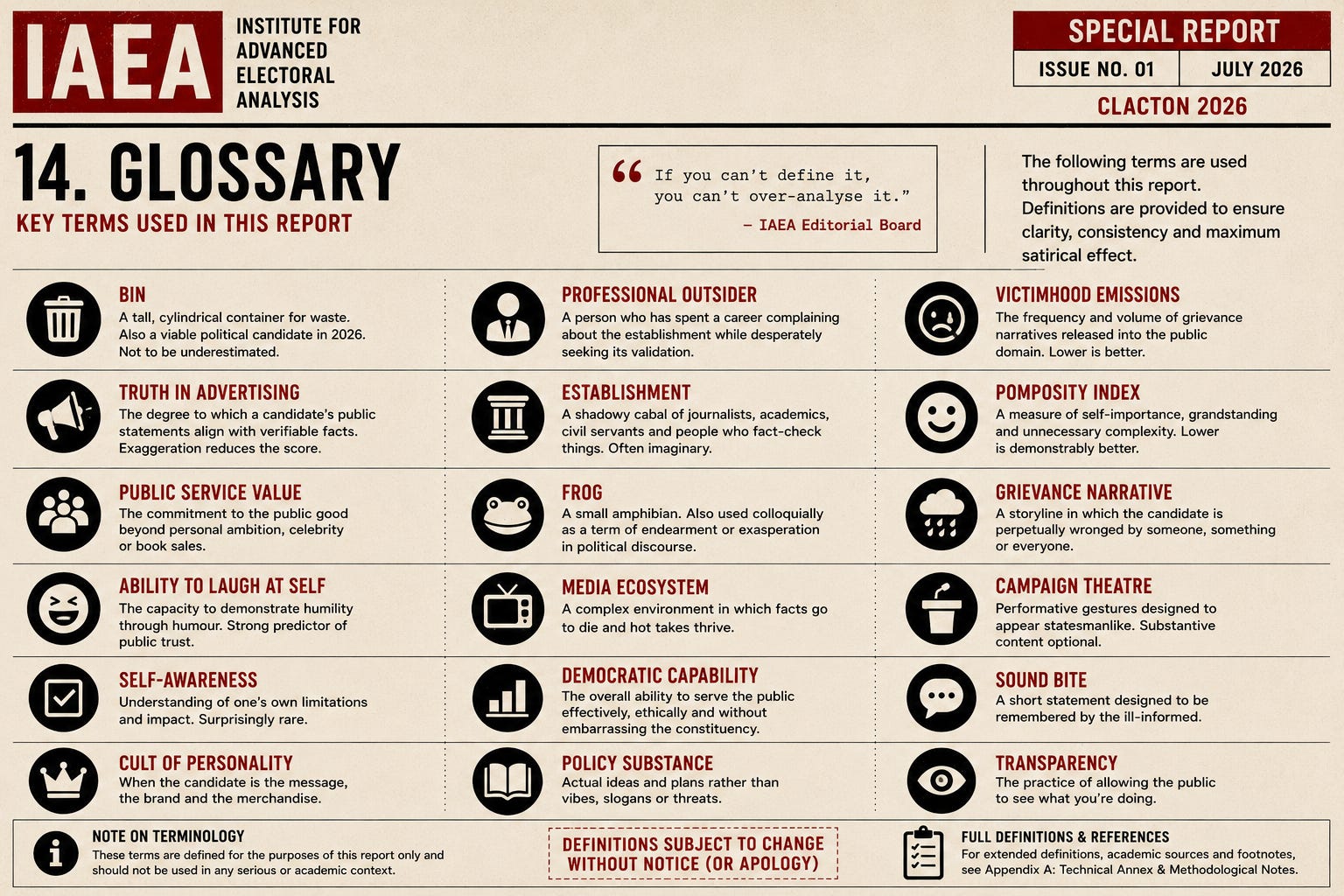
14. Glossary
Every institution eventually develops its own language.
Partly because specialist terminology makes complicated ideas easier to discuss.
Partly because inventing impressive-sounding phrases is one of humanity’s favourite hobbies.
The Institute for Advanced Electoral Analysis is no different.
Throughout this report you’ve encountered expressions like Victimhood Emissions, Pomposity Index and Democratic Capability. They are, of course, entirely made up. That does not necessarily make them less useful than some genuine political science terminology.
Good satire often works by giving familiar behaviours formal names. Once something has a definition, it becomes easier to recognise. Once recognised, it becomes much harder to ignore.
That is the purpose of this glossary.
It is not intended as a serious academic contribution to political science, nor should anyone attempt to cite it in a doctoral thesis unless they possess an unusually adventurous supervisor.
Instead, think of it as a field guide. A catalogue of recurring political behaviours. Some are absurd. Some are exaggerated. Some, unfortunately, are rather more accurate than many of us would like to admit.
If, after reading this report, you find yourself mentally assigning Pomposity Index scores to politicians on the evening news, then the Institute considers its educational mission a complete success.
Closing Remarks
If you’ve made it this far, congratulations.
You’ve successfully completed a serious-looking report produced by an entirely fictional institute, evaluating a man in a wheelie bin against one of Britain’s most recognisable politicians.
If that sentence sounds absurd, that’s because satire has always been most effective when it borrows the language of authority to expose the absurdities that already exist.
This report was never intended to predict an election. It was written to ask a simpler question.
What qualities should we actually reward in the people who seek public office?
Honesty? Humility? Self-awareness? A commitment to public service? Or should politics remain a competition of grievance, ego and permanent performance?
The answers ultimately belong to voters.
The Institute merely provided a framework through which to laugh, think and perhaps look at political behaviour from a slightly different angle.
If, somewhere along the way, you found yourself forgetting that one of the candidates was literally a bin, then perhaps that says rather more about modern politics than it does about this report.
Thank you for reading.
The data may be fictional.
The questions, unfortunately, are not.
Further Reading
The Political Obituary of Nigel Farage (We Hope)
Nigel Farage: The Billionaire’s Man of the People
The Fall of Nigel Farage: The Pint-Man Prophet Finds the Bar Tab
Farage’s Brexit Betrayal Myth Is Just the Same Old Con in a New Hat
Farage Is Not Demanding Democracy. He Is Demanding Advantage.
Farage vs the Evidence: A forensic dismantling of the “two-tier Britain” narrative
How Do You Bring Them Back?: The Outrage Machine, the Failure of Politics, and the Working-Class Case for Reason How do you bring them back?
The Tide Is Coming In: Migration Is History Coming Home
Don’t Let Them Turn Henry Nowak Into a Race War Poster
Is Britain Turning Far Right, or Is the Megaphone Just Too Loud?
Fear, Freedom, and the Emotional Architecture of Politics
Democracy, Populism, and the Death of the Nation-State
Reform UK and the Cult of the Outrage Machine
Normalising Hate: The Political Decay of Post-Brexit Britain
Exposing the “Grooming Gangs” Myth: White British Men and the Truth About Sexual Abuse in the UK
The Big Lie vs The Big Truth: Who Really Abuses Women and Children in the UK
Debunking Common Myths About Immigrants and Asylum Seekers in the UK

Fantastic work. I'll be voting Binface anyway and I hope those constituents who didn't vote last time or didn't vote for Fartrage will get out there and do the same.
Binface v the Nicotine-stained Man Frog.