Whoops Apocalypse
Growing Up Under the Bomb

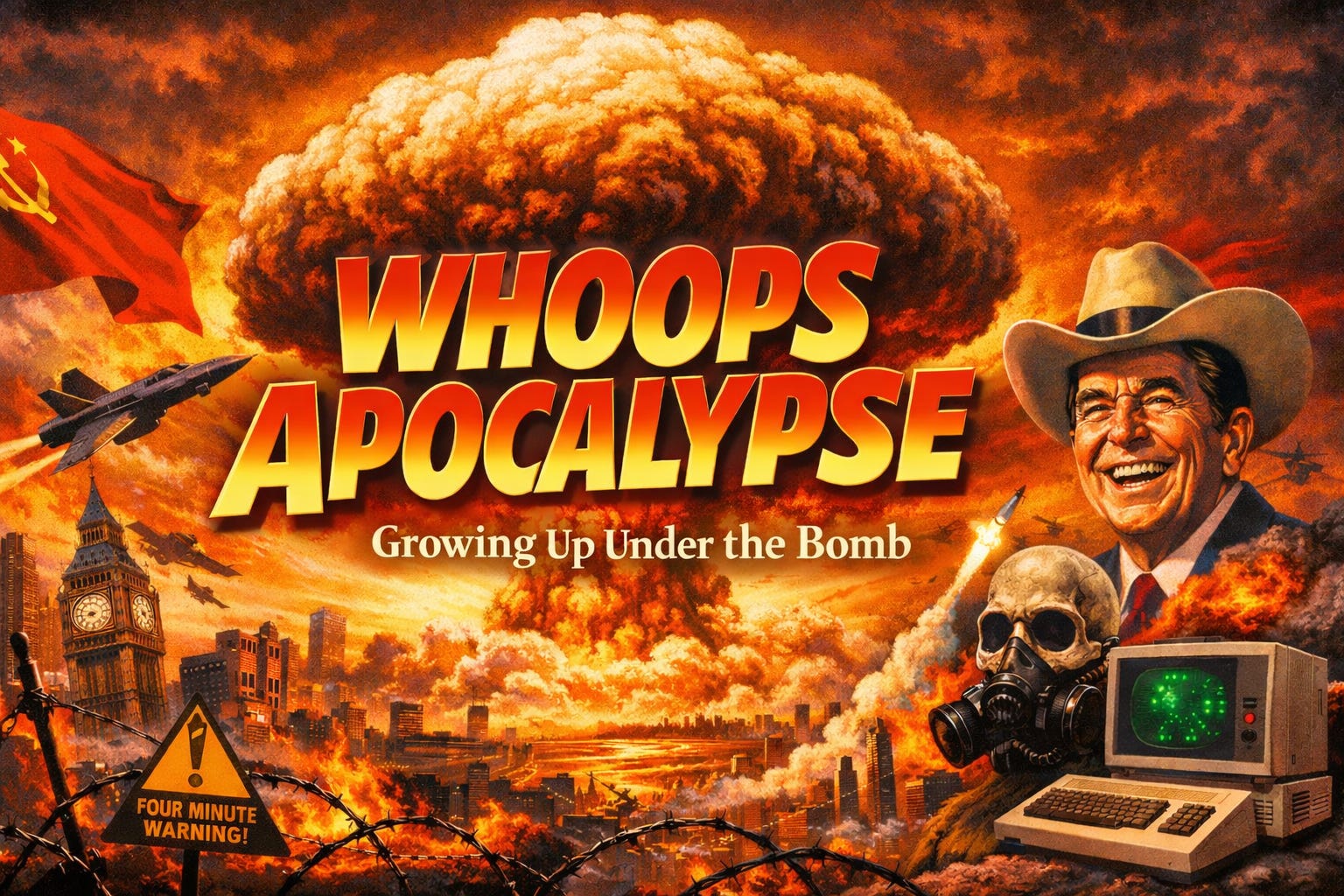
If you grew up in Britain in the late seventies and early eighties, you grew up in a country that quietly and calmly assumed the world might end at any moment.
Not in a philosophical way. Not in the distant future when the sun eventually eats the Earth.
No, we had a timetable. Not a bus type one. This was one shorter than most queue times waiting for the No.56 into town. This one was just four minutes long.
That was the official arrangement. The deal civilisation had struck with thermonuclear annihilation. Four fucking minutes, that’s all warning we were told we’d get, if the Soviet Union launched its missiles.
Four minutes to do… well, what exactly? That part was never entirely clear. Put the kettle on? Hug the dog? Apologise to the neighbours for the lawnmower incident in 1979? Shag the missus, twice!?
But the warning would come.
First the sirens, wound up.
Then the voice, oh the voice!
“This is the sound of the air attack warning.”
That voice, grave, calm, slightly theatrical, belonged to actor Patrick Allen, though of course none of us kids knew that at the time. To us he was just the bloke on the Barrett Homes advert on ITV. But he was the voice of authority, the final voice we would all collectively hear. Explaining, in a tone normally reserved for train announcements, that civilisation might be about to end.
Those broadcasts were part of the government’s civil defence programme, the now infamous Protect and Survive campaign. Leaflets, films, radio announcements, diagrams, a whole instructional system explaining how the British public could survive nuclear war.
The advice was marvellously British.
Build an inner refuge using the internal doors, and cushions off the sofa.
Whitewash your windows.
Stockpile tins.
Apparently the best response to the detonation of a thermonuclear device was to rearrange the living room and open a tin of beans.
Even as a child you could sense the faint Monty Python absurdity of it all. Even as kid, you knew your bedroom door and your mum’s Habitat scatter cushions weren’t going to save you from the a thermonuclear blast. But the thing is, it was everywhere.
You couldn’t escape it. The Cold War seeped into British culture like damp through old brickwork.
It was on television.
It was in the newspapers.
It was in music.
It was in films.
It was in the strange little civil defence pamphlets that occasionally turned up in libraries or council buildings like instruction manuals for the apocalypse.
And it was in the streets too.
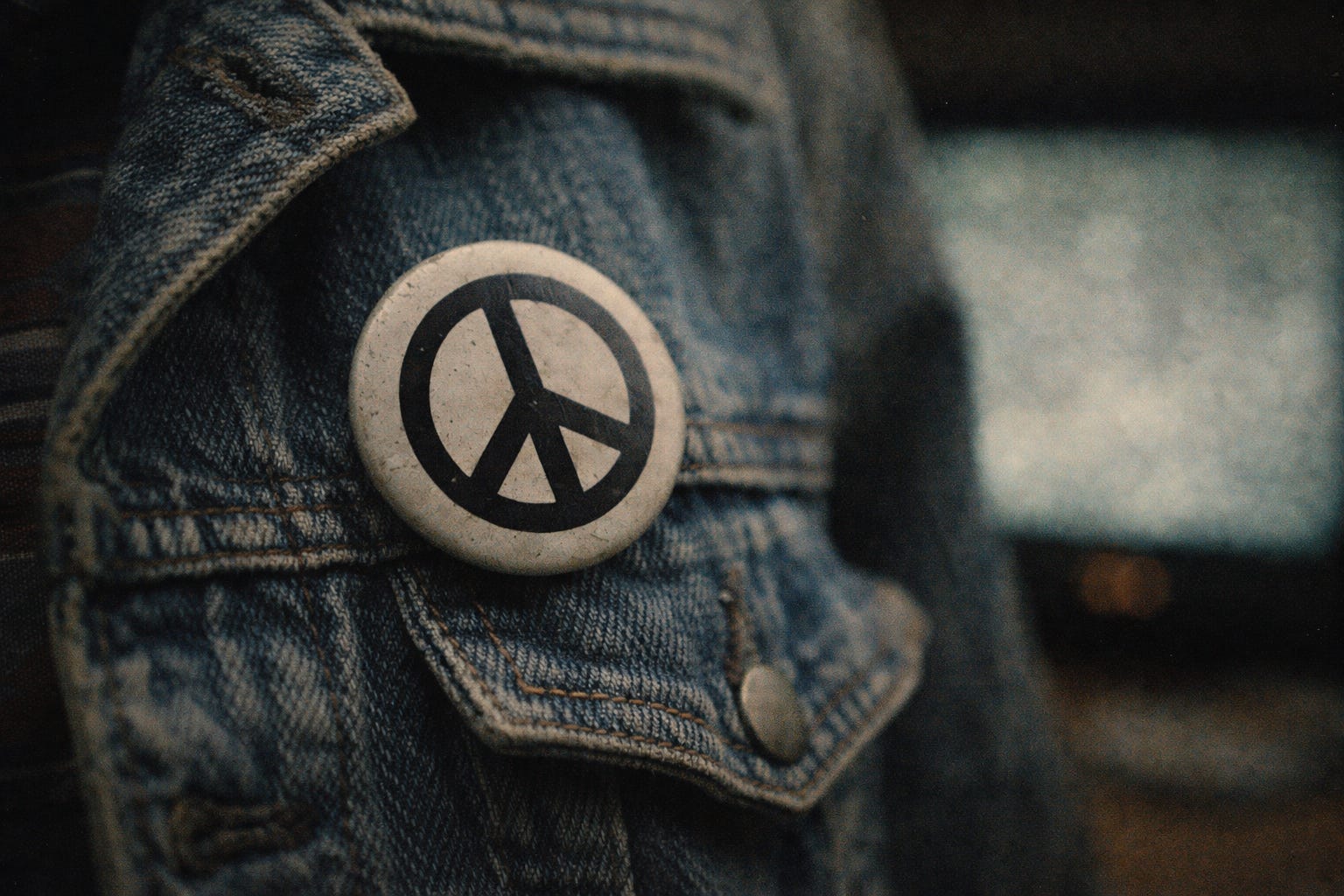
You saw CND badges everywhere back then. That stark peace symbol on denim jackets, school bags, coats. Older kids wore them. Teachers wore them. You’d see them pinned to rucksacks on buses or on the lapels of scruffy activists handing out leaflets about nuclear disarmament.
Greenham Common women chaining themselves to the gates of the airbase.
Marches through London. A whole protest culture orbiting the bomb.
But what was strange about growing up in that atmosphere is that we didn’t necessarily live in constant fear of it.
We simply assumed it was coming. At some point. Sooner or later.
Which is probably why the culture of the time developed this strange mix of dread and satire. If you’re going to live with the possibility of global annihilation hovering in the background like a low rumbling thundercloud, you might as well make a few gallows humour jokes about it.
So the bomb started appearing in the most unlikely places.
It appeared in music.
Frankie Goes to Hollywood detonated straight into the charts with Two Tribes, a track that somehow turned nuclear brinkmanship into a dance-floor anthem. Patrick Allen’s warning broadcasts were sampled straight into the song, his voice echoing through the mix like a ghost from a government bunker.
“This is the sound of the air attack warning…”
And then the synths kicked in.
At the same time Nena’s 99 Luftballons was drifting across the airwaves, telling the story of a nuclear war accidentally triggered by a bunch of floating balloons. A song that somehow managed to be catchy and quietly terrifying at the same time.
OMD’s Enola Gay had already turned the atomic bombing of Hiroshima into an eerily beautiful synth-pop elegy.
Ultravox released Dancing With Tears in My Eyes, a song literally about spending the last moments before nuclear annihilation with the people you love.
Kate Bush’s Breathing imagined the unborn child in a world poisoned by nuclear fallout.
And Sting, in that strange Cold War moment where pop stars suddenly became amateur geopoliticians, sang Russians, solemnly hoping the Soviets loved their children too.
It was everywhere.
The bomb had become a genre.
And then there were the films.
Before Threads traumatised an entire generation of British viewers, America had already delivered its own nuclear nightmare with The Day After in 1983. It was watched by over a hundred million people in the United States and caused such public panic that President Reagan apparently wrote in his diary that it had deeply shaken him.
And the BBC, perhaps deciding that if the Americans were going to frighten everyone they might as well do it properly, they essentially said “hold my beer” and followed up with Threads. If The Day After was terrifying, Threads was annihilating. No Hollywood heroics. No miraculous survivors.
Just the slow, grim collapse of civilisation in Sheffield. Society disintegrating. Infrastructure failing. Survivors starving. Language degrading. Humanity slipping backwards into something medieval and desperate.
I remember it as a moment that we never forgot, people talking about it afterwards in that stunned tone normally reserved for disasters and funerals. You didn’t watch Threads. You endured it. It took me and many of my generation, traumatised by it, 40 years to be able to watch it again. And all that trauma came flooding back.
Raymond Briggs took a different approach with When the Wind Blows, telling the story of Jim and Hilda Bloggs, an elderly couple faithfully following the advice of the Protect and Survive pamphlets while radiation quietly kills them.
The film, based on the famous graphic novel/comic book, starts gently, almost sweetly. Then it slowly crushes your heart. With a soundtrack that included the title song When the Wind Blows by David Bowie, written specifically for the film, and also featured music by Roger Waters and Genesis, which makes it one of the most strangely stacked soundtracks for such a bleak animated film.
Meanwhile Hollywood offered a different nightmare entirely with WarGames, where a teenage hacker accidentally starts a nuclear war while playing what he thinks is a computer game.
Which brings us neatly to the bedroom.
Because nuclear war didn’t just appear on television.
It appeared in video games.
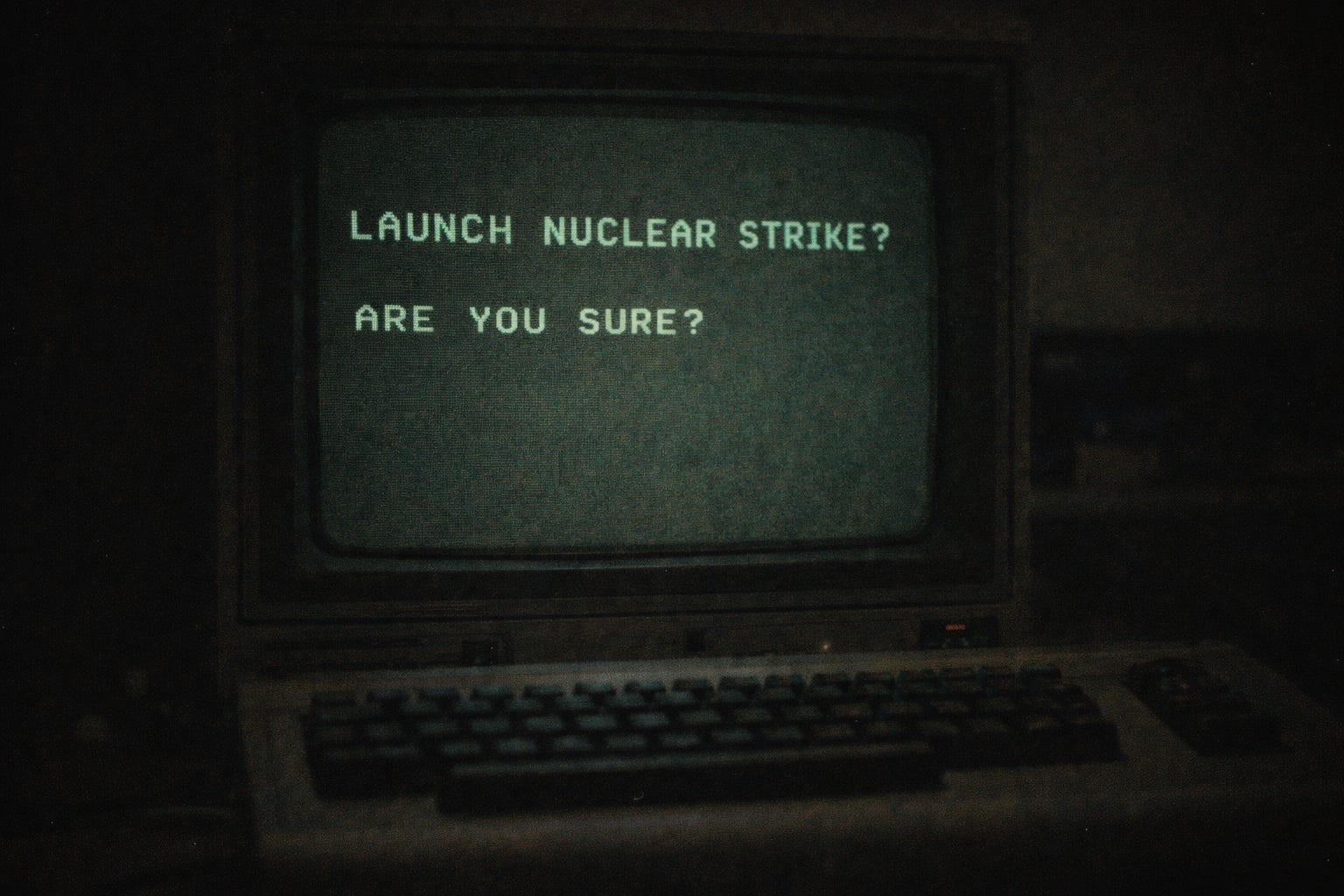
In Britain the eighties were the golden age of bedroom computing. The ZX Spectrum and Commodore 64 arrived in millions of homes, transforming teenagers into amateur programmers and digital explorers.
But what did they sometimes explore? Global thermonuclear war, of course.
Games like Theatre Europe and Raid Over Moscow allowed players to simulate Cold War strategy from the comfort of their bedrooms. Sitting there with a joystick in one hand and a bowl of cereal in the other, you could decide whether NATO should launch retaliatory strikes against the Warsaw Pact.
Game over.
Looking back, it’s extraordinary that nuclear war became something kids played as an evening pastime.
But that was the atmosphere of the time.
Even comedy couldn’t resist it.
British humour has always had a peculiar relationship with catastrophe. We cope with existential dread by making tea and cracking a joke about it.
Which is how we ended up with films like Whoops Apocalypse, where nuclear war becomes a farce driven by incompetent politicians and bureaucratic stupidity.
Even anarchic sitcoms like The Young Ones joined in. In one episode Neil paints himself entirely white after hearing that radiation exposure can bleach hair and skin.
The solution, apparently, is to bleach yourself first. It was ridiculous. But the joke worked because everyone understood the reference.
The bomb was simply part of the cultural furniture.
Even local councils got involved.
Growing up in Hull I remember a booklet produced by the city called Hull and the Bomb. It explained what might happen to the city in the event of nuclear war.
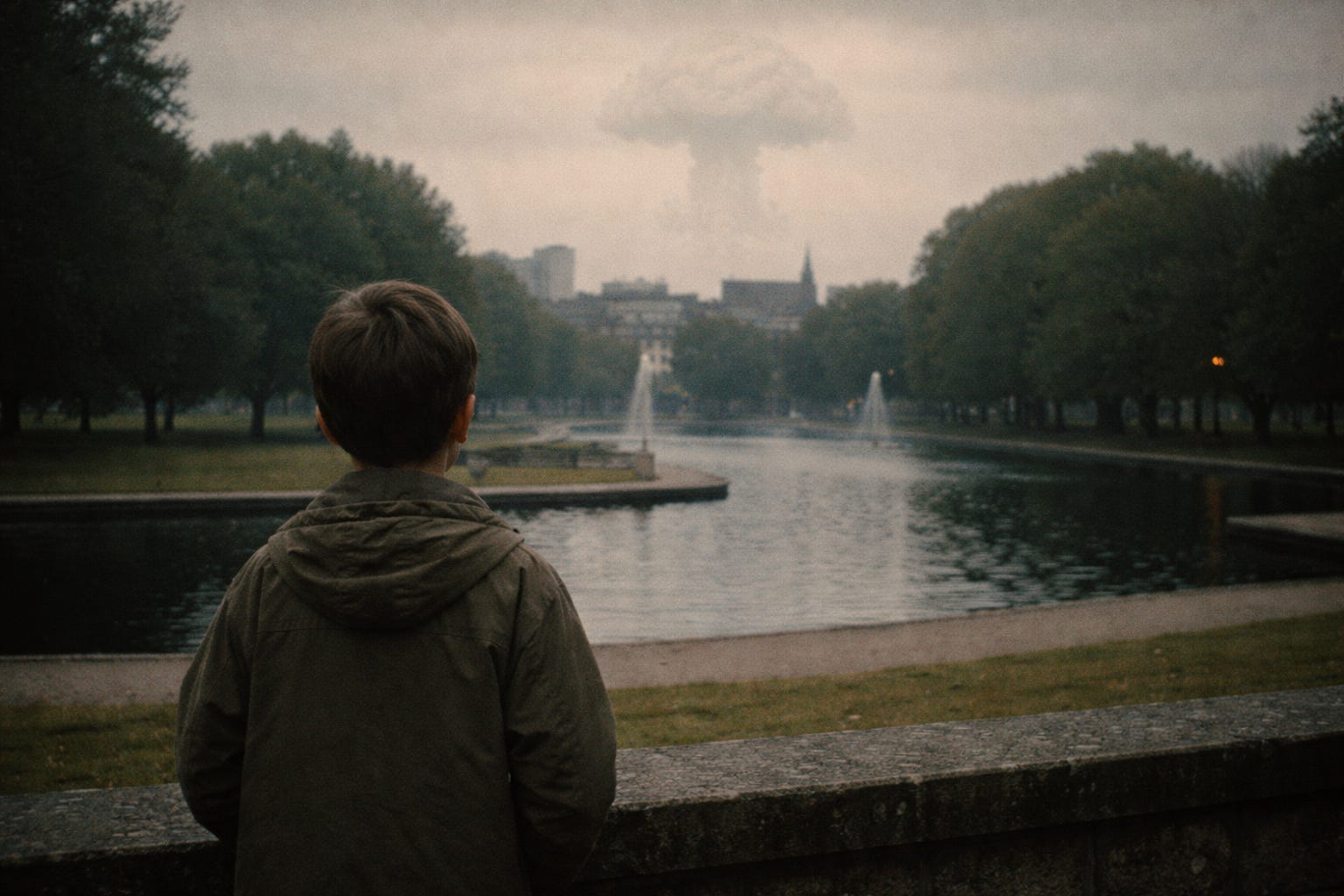
The cover showed Queen’s Gardens, one of Hull’s most recognisable landmarks, with a huge mushroom cloud rising above it.
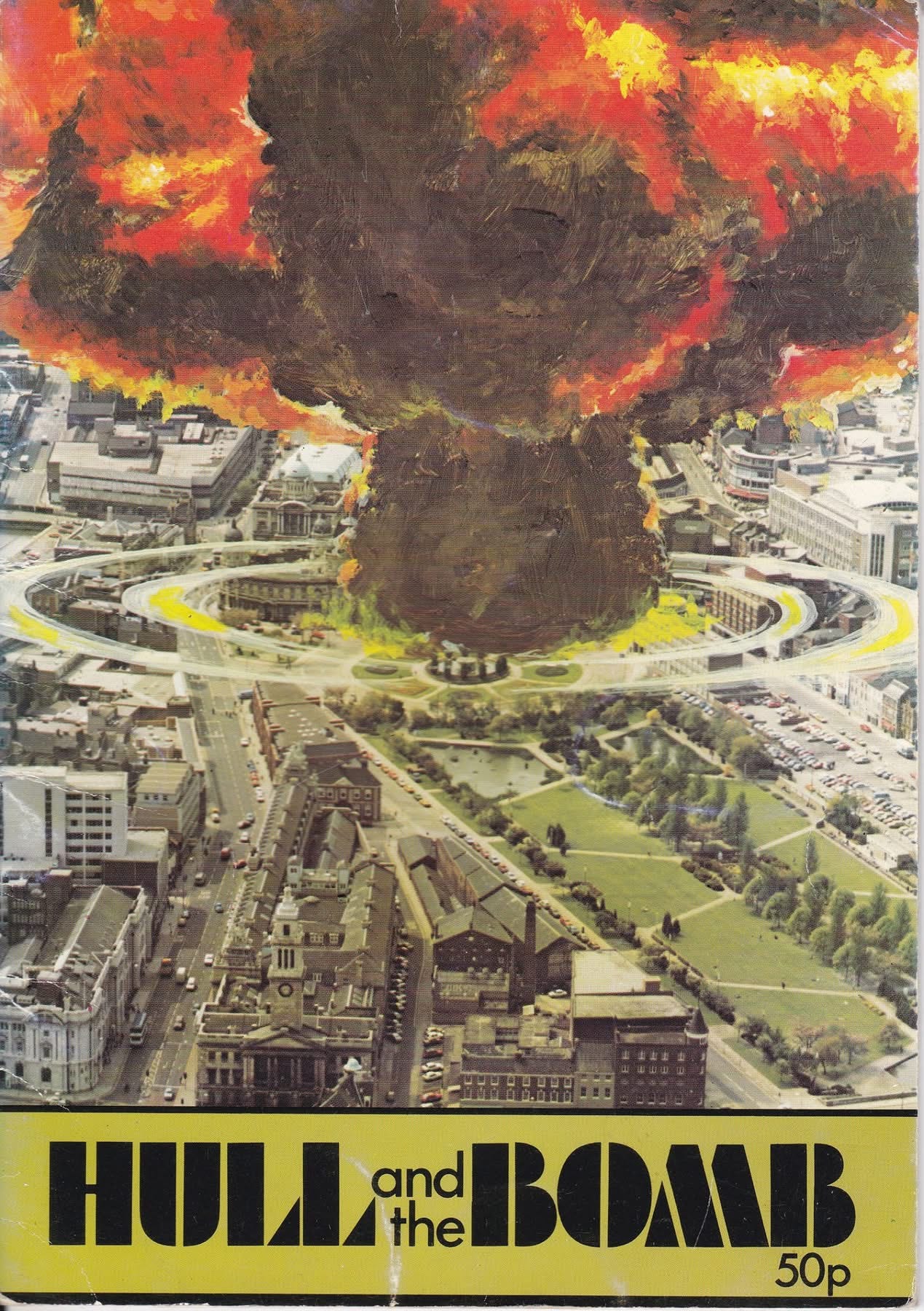
As a kid that image produced a strange mental jolt.
Queen’s Gardens? That place?
The place where you fed the pigeons and skived off school, laid on the grass near the Rose Bowl Fountain in a summer, before a wander around town?
That was apparently ground zero. It gave the apocalypse a postcode. HU1 2AA.
There were Cold War relics dotted around the countryside too. Bunkers hidden in fields and villages. Civil defence posts designed to monitor radiation after the bombs fell.
Two I remember hearing about growing up were near Wawne and Patrington, quiet villages just outside Hull. My Nana lived in Patrington, my mum was born there. The idea that somewhere out there in those flat East Yorkshire fields were little concrete shelters waiting for the end of the world felt oddly cinematic. It felt like living in a sci-fi film.
Which makes one later adult memory feel even stranger. Years later I lived in South Korea between 2006 and 2013. Whenever anyone asked, what it was like living there, I’d say it was like living inside a sci-fi film, more specifically Blade Runner, but I digress.
South Korea has its own peculiar relationship with the possibility of war, living next door as it does to North Korea. Because of that, the country runs regular civil defence drills. Once a month the sirens sound. The first time it happened I was walking down a street when suddenly the air filled with that long rising wail.
The sirens.
And instantly my brain snapped backwards thirty years.
Back to childhood.
Back to the Cold War documentaries.
Back to Protect and Survive.
Back to Patrick Allen calmly explaining the end of the world.
It was the exact same sound.
Exactly.
But this time it was real.
Echoing through the streets of a modern city.
And the strangest thing of all?
I loved it.
Not because I thought North Korea was about to attack. Anyone who actually lives in South Korea knows that’s extremely unlikely. But because hearing those sirens felt like stepping into a strange childhood memory.
The apocalypse rehearsing itself.
Standing there listening to that sound echo across the city, I realised something odd about my generation. Growing up under the bomb had given us a peculiar relationship with catastrophe.
We grew up in a culture that treated nuclear war as both tragedy and punchline. It was the subject of protest marches, government pamphlets, pop songs, BBC dramas and ridiculous sitcom jokes all at the same time.
Which meant the end of the world stopped feeling like science fiction.
It felt like a scheduling issue.
Four minutes’ notice.
That was the deal.
Which probably explains why an entire generation could watch the world end on television, dance to Frankie Goes to Hollywood afterwards, and still go to school the next morning.
Because once you’ve grown up expecting the apocalypse any day now… everything else feels a bit less final.
And still every so often, if I listened carefully, I can almost hear the sirens warming up.
From Hull, a City That Burned: Why War Is Nothing to Celebrate
Channel 4 Before It Learned to Behave
THE SARCASM PROBLEM: WHY BRITAIN CAN’T SAY ANYTHING STRAIGHT
The Quiet Patriot: Why Real Brits Don’t Need Flags to Prove It
THE BREXSHITTERS OF BENIDORM: A field study in migrant-hating migrants.

I remember seeing the American Duck and Cover infomercials with school kids getting under their desks (an eerily prescient forerunner of the now ubiquitous Active Shooter drills). The thing that scared me most was the film On the beach which portrayed a world with no survivors except people in Australia waiting for the deadly radiation cloud to reach them. A fabulously understated and undramatic low budget horror movie where what’s scary is what you can’t see but can’t help but imagine.
I qualified as a radiation biologist so I was well versed in the stages of radiation sickness which killed you more rapidly the greater the lethal exposure you had received. Here again was the horror of inevitability. You knew what you would be suffering in your remaining days or weeks and that there was nothing you could do to avoid or alleviate it. Hats off to the heroic Russian helicopter pilots who flew what they knew were fatal flights over the burning Chernobyl core to get invaluable film of what was happening.
The threat of mutually assured destruction losing its preventative charm seems greater now than ever with Trump and Putin riding nuclear codes. Scant reassurance that they may just as well find other ways to obliterate us all or they may sit back and let accelerating climate change do the work for them.